3 Days Free Demo Class — sit in on real classes before you enrol.Book your free demo → 9991 729 730

What Is Performance Marketing? A Beginner's Guide for India

Performance marketing is advertising that you judge by results you can count: clicks, enquiries and sales. If you have wondered what is performance marketing and whether it could be your first job in digital marketing, this guide explains it in plain words, with one worked example in rupees and a safe way to start practising.

Riya Malik 8 min read Updated November 2026
What Is Performance Marketing? A Beginner's Guide for India

What is performance marketing, in simple words?

Performance marketing means you pay for ads and then measure exactly what those ads brought back. Not "people liked it", but numbers: how many people clicked, how many filled a form, how many paid.

Think of a shop that hands out pamphlets. Normal advertising is printing 1,000 pamphlets and hoping. Performance marketing is printing a code on each pamphlet, so you know which street sent the customers.

One common myth is that you only pay when a sale happens. That is true for some affiliate deals, but on Google Ads and Meta you usually pay for clicks, or for impressions (the times your ad was shown). The "performance" part is how you judge and steer the money, not always how you are billed. On Meta, the billing choices you get depend on the campaign objective you pick.

If you are coming from another field, our guide to switching careers into digital marketing shows where performance marketing fits among the other roles.

Which channels do performance marketers use?

Most beginner roles in India revolve around two platforms, plus a few smaller ones.

Not sure which one suits a small business? Read Google Ads vs Meta Ads for a small business.

  • Google Ads.: Ads that show when someone searches, such as "spoken English classes Rohtak". The person is already looking, so intent is high. Google also shows ads on YouTube, Gmail and partner websites, and a Performance Max campaign can use all of this inventory from one campaign.
  • Meta Ads.: Ads on Facebook, Instagram, Messenger and WhatsApp. Here you reach people by location, age and interests before they search. It suits things people are not searching for yet, like a Jaipur boutique's new kurti range.
  • Others.: Marketplace ads on Amazon or Flipkart, LinkedIn for business buyers, affiliate deals and newer ads inside AI chat tools. Learn these after the big two.

What is the performance marketing funnel?

A funnel is the path from stranger to customer. Many people enter at the top and only a few come out at the bottom, like water through a kitchen funnel.

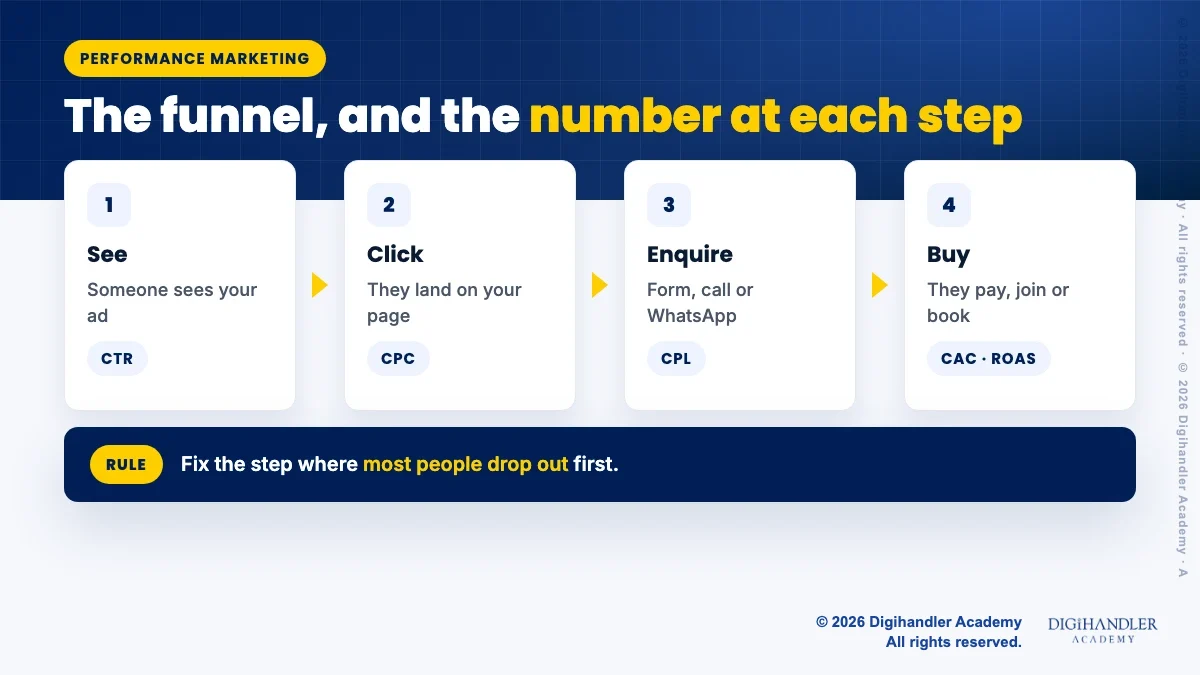
Each step has its own number. Your job is to find the step where most people drop out and fix that step first. A great ad cannot save a slow, confusing landing page.

  1. See: someone sees your ad. That is one impression.
  2. Click: they click and land on your page.
  3. Enquire: they fill a form, call or send a WhatsApp message. That is a lead.
  4. Buy: they pay, join or book. That is a sale or an admission.
Four step funnel from see to click to enquire to buy, with the metric used at each step: CTR, CPC, CPL, then CAC and ROAS
Every step of the funnel has its own number to watch.

Performance marketing metrics explained in plain words

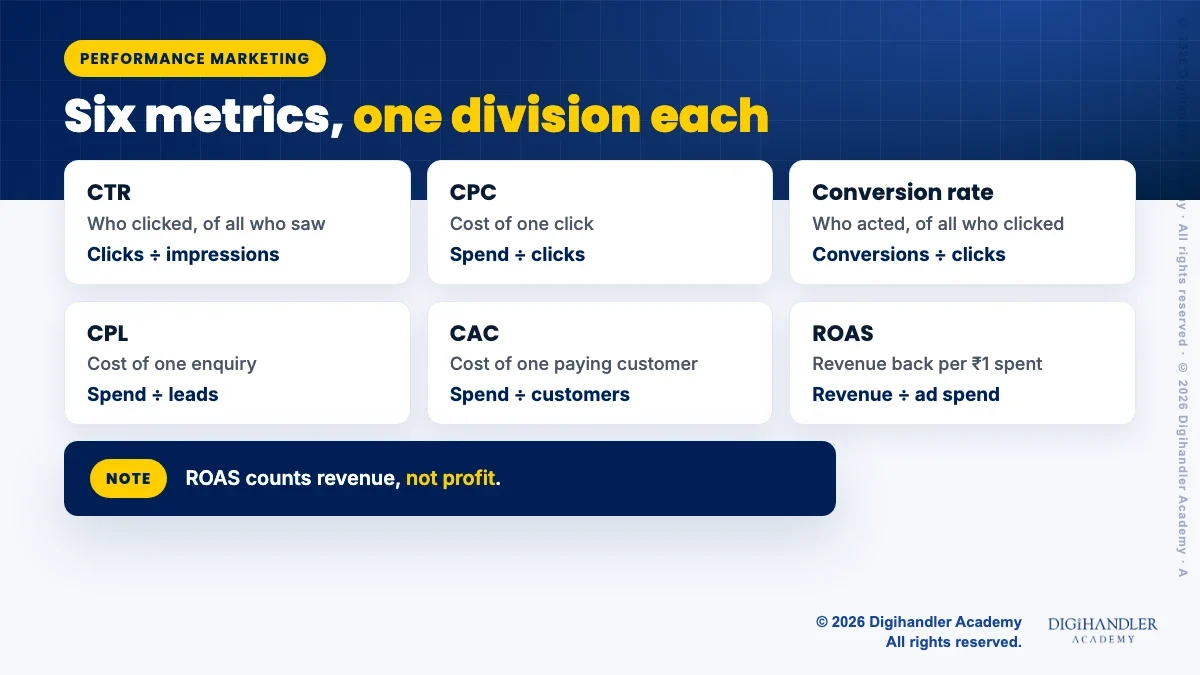
You will hear six short forms every day. Here they are without jargon.

  • CTR (click-through rate):: out of everyone who saw the ad, how many clicked. Clicks divided by impressions. Google's own example: 5 clicks from 100 impressions is a 5% CTR.
  • CPC (cost per click):: what one click cost you on average. Spend divided by clicks.
  • Conversion rate:: out of the people who clicked, how many did the thing you wanted, such as filling the form. Conversions divided by clicks.
  • CPL (cost per lead):: what one enquiry cost. Spend divided by leads.
  • CAC (customer acquisition cost):: what one paying customer cost. In the simple version it is ad spend divided by customers. Many businesses also add salaries and tools.
  • ROAS (return on ad spend):: money earned from the ads divided by money spent on them. Getting ₹4 back for every ₹1 spent is a ROAS of 4, or 400%. It counts revenue, not profit, so a ROAS of 2 can still lose money once the business pays for the product, staff and rent.
Cheat sheet card of six performance marketing metrics, CTR, CPC, conversion rate, CPL, CAC and ROAS, each with its simple formula
Six metrics, each one simple division.

A worked example with hypothetical numbers

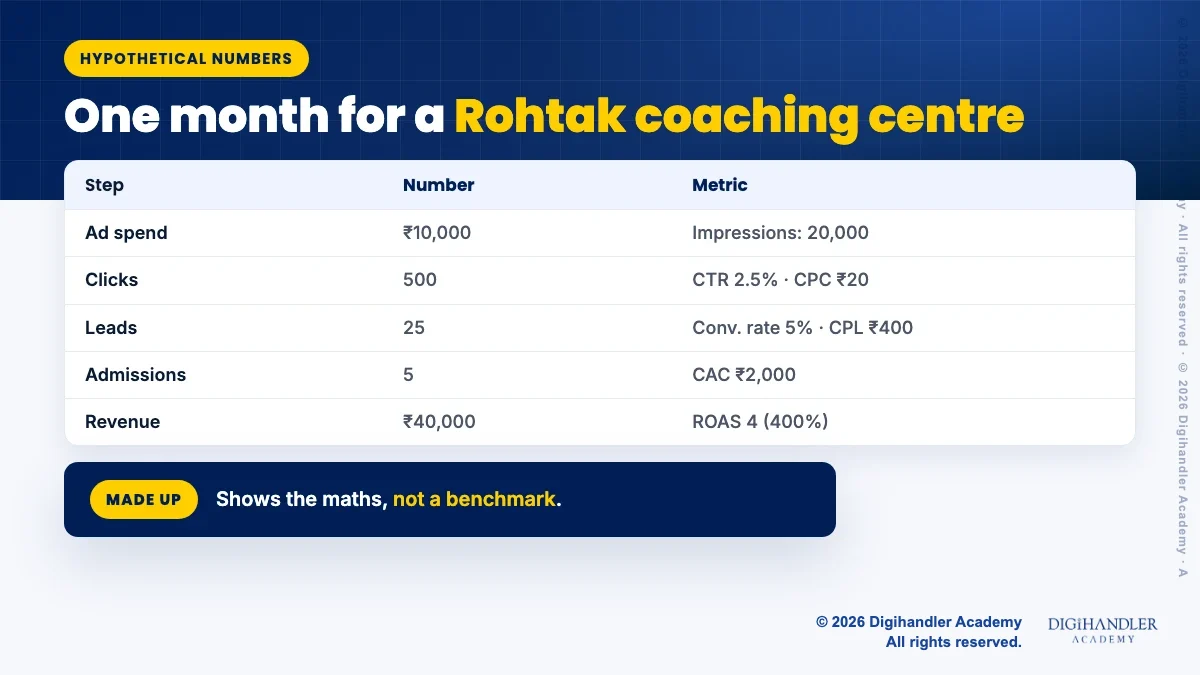
Let us invent a small coaching centre in Rohtak. Every number here is made up to show the maths. It is not a benchmark you should expect.

  1. Spend: ₹10,000 on ads in one month.
  2. Impressions: 20,000. Clicks: 500. CTR = 500 ÷ 20,000 = 2.5%.
  3. CPC = ₹10,000 ÷ 500 = ₹20 per click.
  4. Leads: 25 form fills. Conversion rate = 25 ÷ 500 = 5%. CPL = ₹10,000 ÷ 25 = ₹400.
  5. Admissions: 5. CAC = ₹10,000 ÷ 5 = ₹2,000.
  6. Fee per admission: ₹8,000, so revenue is ₹40,000. ROAS = ₹40,000 ÷ ₹10,000 = 4, or 400%.
Hypothetical coaching centre example: ₹10,000 spend, 500 clicks, 25 leads, 5 admissions, giving CPC ₹20, CPL ₹400, CAC ₹2,000 and ROAS 4
Made-up numbers, real method: one division at each step.

How do you use these numbers to fix a campaign?

Say the owner complains that leads cost too much. You do not guess. You walk down the funnel.

Clicks are coming in, so the ad is doing its job. Only 5 in 100 clickers enquire, so test the landing page first: a shorter form, a WhatsApp button, a clearer fee line. Only 1 in 5 leads joins, so ask the counsellor what happens on the phone. The numbers tell you where to look. Change one thing at a time so you know what worked.

What does a performance marketer do in a week?

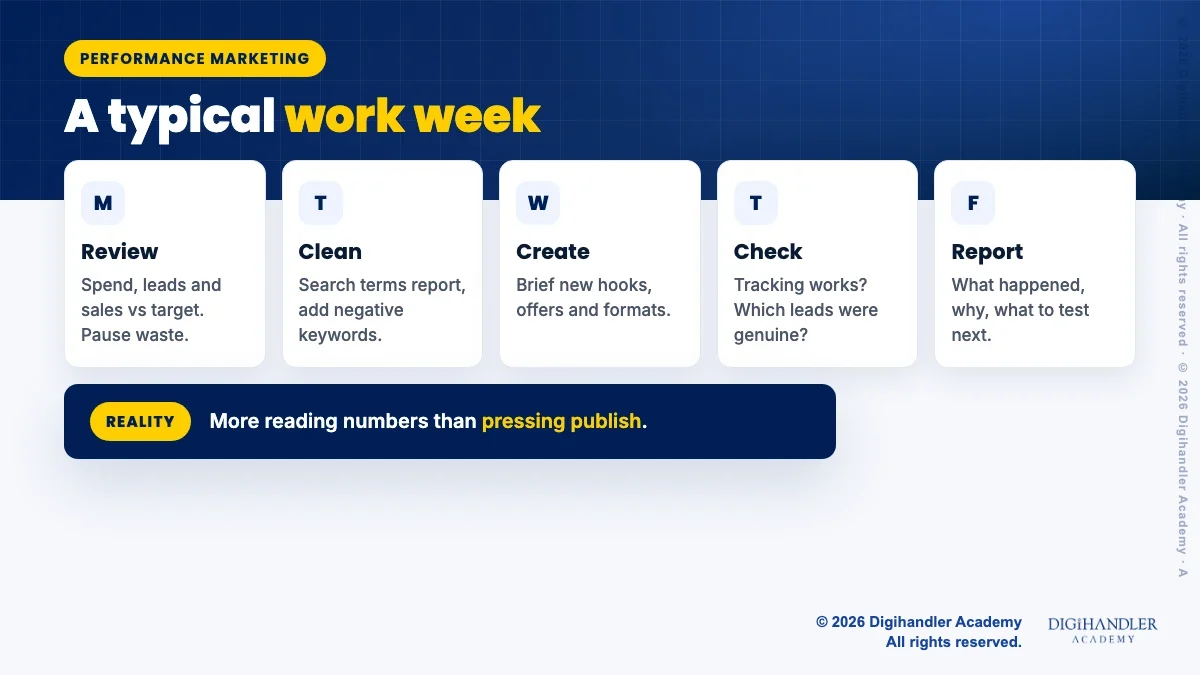
Less time pressing "publish", more time reading numbers and talking to people. A typical week might look like this.

Reporting is a big part of the job, so learning Google Analytics 4 for beginners early pays off. If you enjoy content and community more than spreadsheets, compare this with what a social media manager does all week.

  • Monday:: check last week's spend, leads and sales against the target. Pause what clearly wastes money.
  • Tuesday:: read the search terms report in Google Ads and add negative keywords, so your paid course ad stops showing for searches with "free" or "jobs" in them.
  • Wednesday:: brief new ad creatives with the designer or video editor: fresh hooks, offers and formats.
  • Thursday:: check that tracking still works, and ask the sales team which leads were genuine. A cheap lead who never picks up the phone is not cheap.
  • Friday:: send a short report: what happened, why, and what you will test next week.
Monday to Friday strip of a performance marketer's week: review numbers, clean search terms, brief creatives, check tracking and lead quality, send report
Most of the week is reading numbers and acting on them.

Which tools does a performance marketer use?

A short list covers most of the work.

  • Ad platforms:: Google Ads and Meta Ads Manager.
  • Tracking:: Google Ads conversion tracking, the Meta Pixel (a small piece of website code that records what visitors do) and Google Analytics 4.
  • Spreadsheets:: Google Sheets or Excel for daily numbers. Most of the maths in this post is one division.
  • Research:: Meta Ad Library and Google's Ads Transparency Center are free and public, so you can study the ads other businesses run.
  • Creative:: Canva or a simple video editor for quick ad versions.

How to start practising performance marketing with a small budget

You do not need a big budget to learn. You need a small one, a clear goal and patience.

  1. Learn the basics from free lessons on Google Skillshop and Meta Blueprint. Our list of free digital marketing certifications helps you choose.
  2. Find a real small business, like a relative's shop or a friend's tuition class. Get their permission, and run the ads on their account and their payment method, not yours.
  3. Set up tracking first, so a form fill or WhatsApp click is counted as a conversion.
  4. Start with a small daily budget, for example ₹200 to ₹300. Google Ads can spend up to twice your average daily budget on one day, but over a month it will not charge more than about 30.4 times that daily average. Plan for both.
  5. Run one campaign with one clear goal for at least a week or two before you judge it.
  6. Log every change and its result in a sheet. That sheet becomes your portfolio.

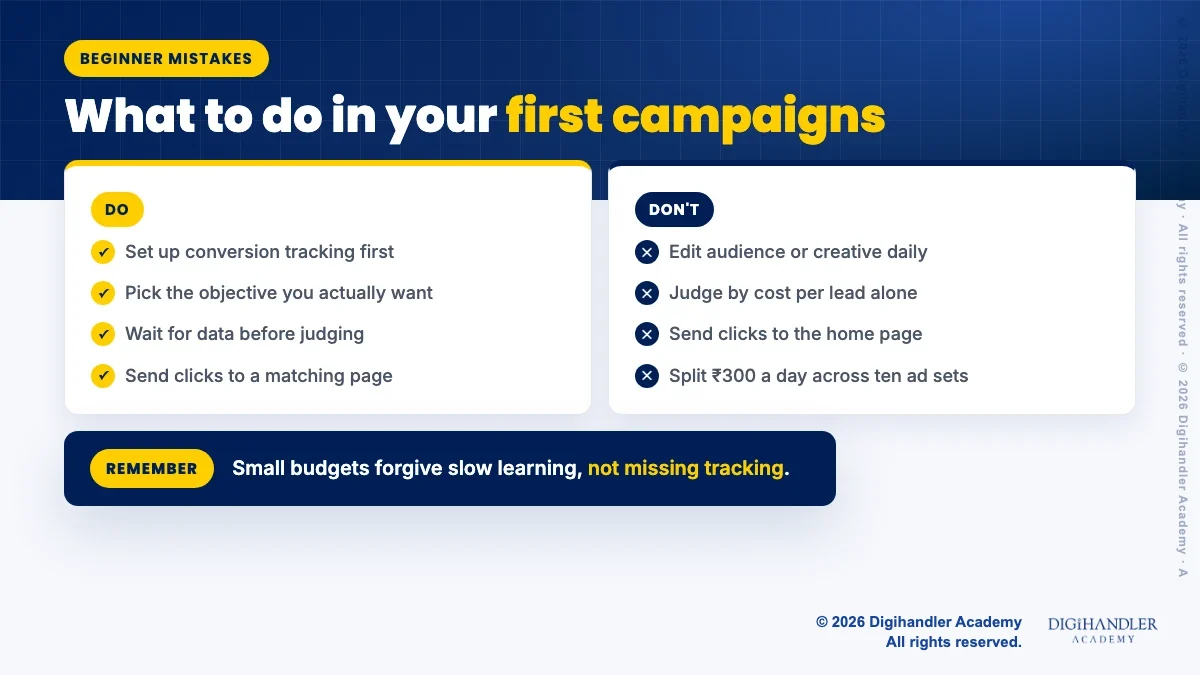
Common beginner mistakes in performance marketing

Almost everyone makes these in the first month.

For more Meta specific errors, read common Meta Ads beginner mistakes.

  • Choosing the wrong goal.: Picking a traffic or engagement objective when you wanted enquiries. The platform will find exactly what you asked for.
  • Running ads without tracking.: Without conversion tracking you are guessing, and so is the platform.
  • Changing things every day.: Meta needs around 50 optimisation events after a significant edit to leave its learning phase. Changing the audience, creative or optimisation event daily keeps resetting that.
  • Judging by CPL alone.: Cheap leads who never answer are expensive.
  • Sending clicks to the home page.: Send people to a page that matches the ad they clicked.
  • Spreading a tiny budget thin.: Ten ad sets on ₹300 a day means none of them gets enough data.
Do and don't card for beginners: track conversions, pick the right objective, wait for data, versus daily edits, judging by CPL alone and sending clicks to the home page
Small budgets forgive slow learning, not missing tracking.

Do you need a performance marketing course?

Not always. Many people learn from free lessons and their own small campaigns. What is hard to get alone is feedback: someone who opens your account and tells you why the CPL went up.

A good performance marketing course gives you practice on live accounts, a trainer who reviews your work, and real time on tracking, not only on clicking buttons. Before you pay anywhere, attend a demo class and ask to see what students actually build. Digihandler Academy offers free demo classes, live online or at its Rohtak campus, and you can compare the Google Ads and Meta Ads course outlines there.

Riya Malik
Written by Riya MalikContent Writer, Digihandler Academy

Riya writes Digihandler Academy's guides and roadmaps. Every article is fact-checked and reviewed by Lovish Madaan, founder & trainer, who has run the Digihandler agency since 2018. More from Riya →

Digital marketing skills, explained

  1. Part 1: Switching careers into digital marketing
  2. Part 2: What performance marketing is (you are here)
  3. Part 3: What a social media manager does coming soon
  4. Part 4: GA4 for beginners coming soon
  5. Part 5: Editing reels that get watched coming soon
  6. Part 6: Learning part-time while you work or study coming soon

From our Instagram

Inside the 6-month digital marketing course (swipe) · View on Instagram

Common questions

No. Digital marketing is the whole field: SEO, social media, content, email, ads and more. Performance marketing is one part of it, focused on paid ads that are judged by measurable results such as leads, sales and return on ad spend. A performance marketer mainly works in Google Ads, Meta Ads and tracking tools. Many people start with general digital marketing basics and then specialise in performance marketing once they find they enjoy numbers and testing.

Yes. You do not need to write code to run Google Ads or Meta Ads. You do need to be comfortable with simple maths, spreadsheets and reading reports. Tracking setup sometimes means adding a code snippet to a website, but platforms and plugins guide you through it, and developers often help. The more important skills are clear thinking, patience with testing, and writing ads that match what people are searching for or interested in.

You can learn the basics with free lessons and public tools like Meta Ad Library before spending anything. For hands-on practice, a small daily budget of a few hundred rupees on a real small business is enough to see real data. Ideally the business owner pays for the ads on their own account. Remember that Google Ads can spend up to twice the average daily budget on a single day, so set limits you are comfortable with.

There is no single good ROAS. ROAS is ad revenue divided by ad spend, so a ROAS of 4 means ₹4 in sales for every ₹1 of ads. Whether that is good depends on the business's profit margin. A product with high costs may need a much higher ROAS to make a profit, while a high margin service can do well with a lower one. Work out the break-even ROAS from the business's real costs first.

Either works, and most jobs want both. Google Search ads are a good first step for understanding intent, keywords and conversion tracking, because people are already searching. Meta Ads teach audiences and creative testing, and they suit businesses whose customers are not actively searching yet. A practical route is to learn the shared metrics first, then pick the platform your first practice business needs most, and add the other after a few weeks.

More from the blog

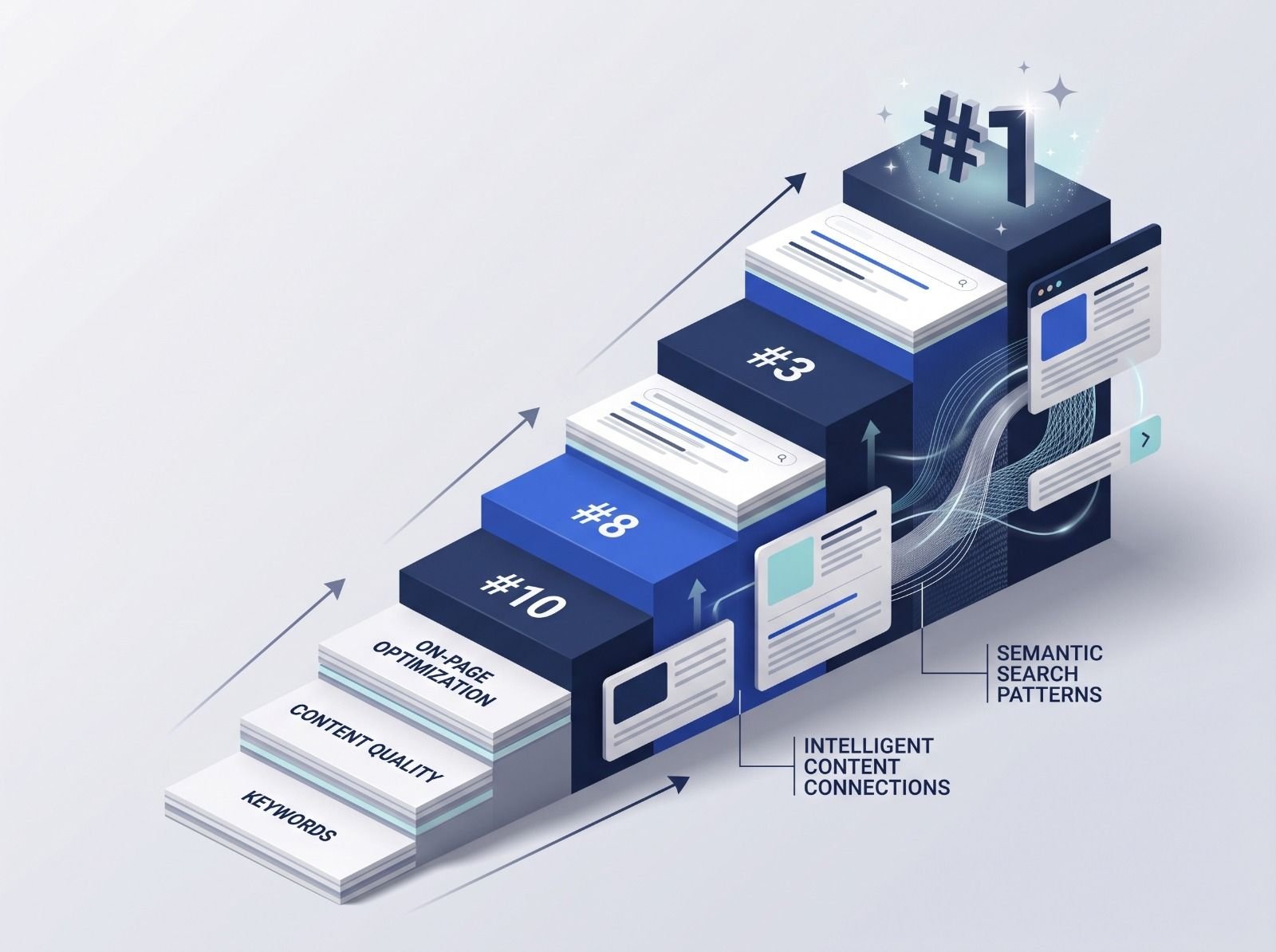
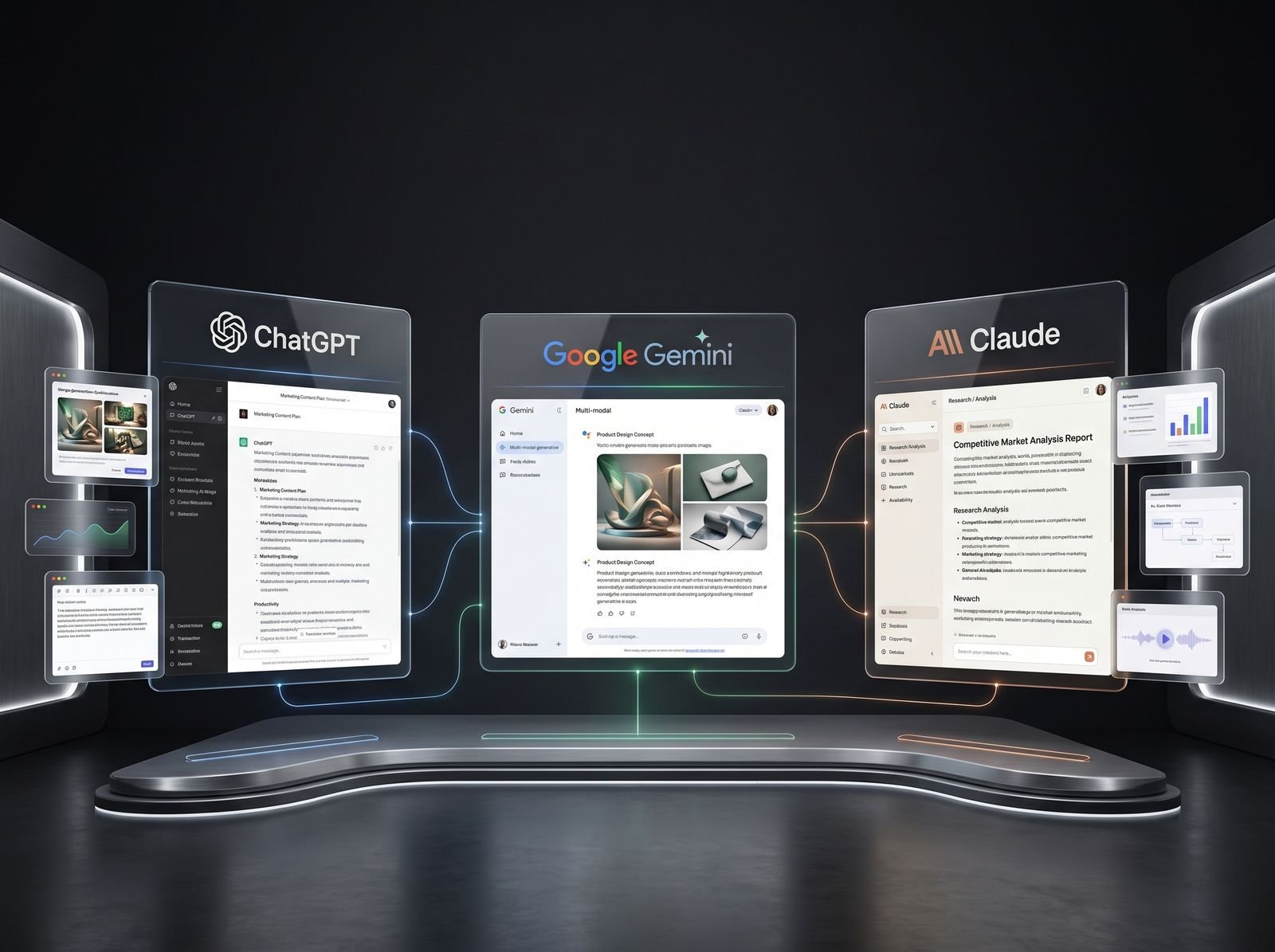
AI in digital marketing: what actually works right now

AI in digital marketing: what actually works right now

Where AI genuinely saves marketers time on real client work, and where it quietly makes things worse.

Read article →

AI SEO: how to get cited inside AI search results

AI SEO: how to get cited inside AI search results

What decides whether an AI assistant quotes your page, and the fixes worth doing first.

Read article →

Learn this properly

3 days free · Rohtak campus & live online

We'll call you within 24 hours. No spam, ever.

Prefer to talk? Call 9991 729 730.