AI in digital marketing: what actually works right now
Where AI genuinely saves marketers time on real client work, and where it quietly makes things worse.
Read article →
A career switch to digital marketing is possible from almost any job, but it is not magic and it is not fast. This guide shows which of your current skills already count, a 4 to 6 month plan you can follow alongside work, the honest money and time picture, and how to show an employer you can do the job.
Yes, for most people it is realistic. Digital marketing has no single entry exam and no required degree. Employers mostly want to see that you can do the work: write a post that people read, run a small ad, read a report and explain it.
That is good news and hard news. Good, because your past job does not lock you out. Hard, because nobody will hire you on interest alone. You need skills and small pieces of proof.
Think of it like moving to a new city. You keep your habits and your experience. You only need to learn the new roads. This post is the map. If you are still a student or fresh graduate, the guide for freshers fits you better.
More than you think. Most marketing work is explaining things clearly, understanding people and working with numbers. Your current job already trains at least one of these.
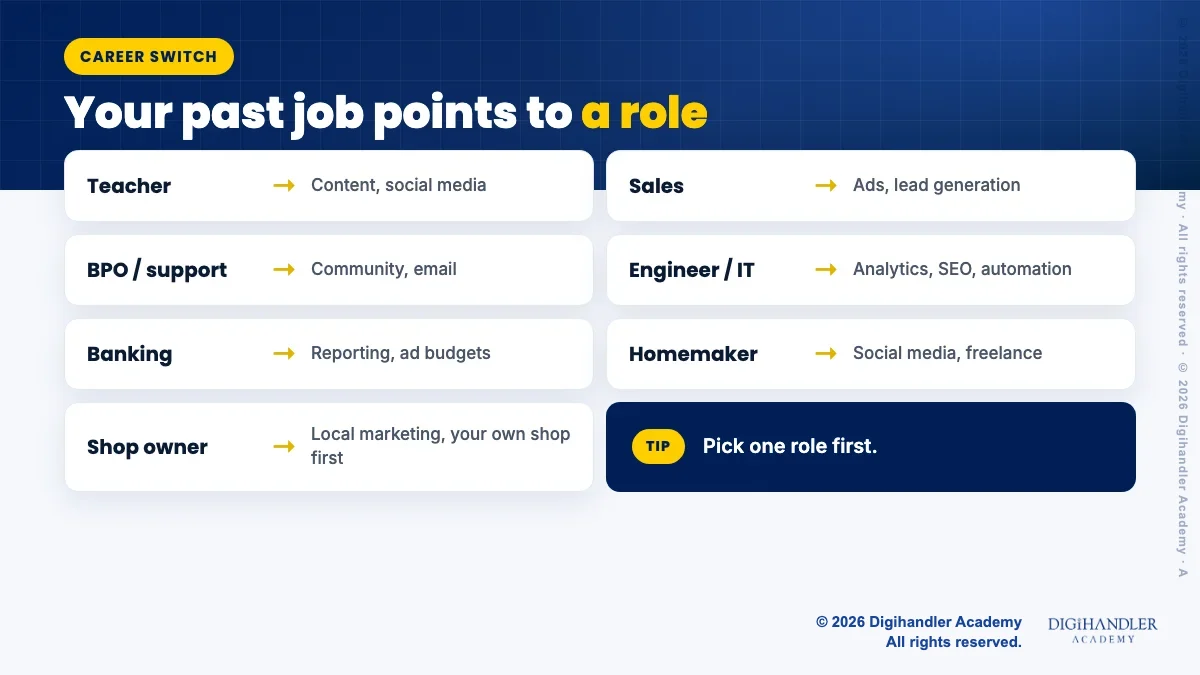
Pick one role first, not five. A clear target makes your learning, your proof and your resume line up.
Common first roles in India are social media executive, content writer, SEO executive, performance marketing executive (ads) and digital marketing executive, which is a mix of everything at a small company. Read what a social media manager actually does all week to see if that daily work suits you.
Choose by two questions. What did you enjoy in your old job: people, words or numbers? And which role uses that most? Words point to content and social. Numbers point to ads and analytics. People point to social media and client work.
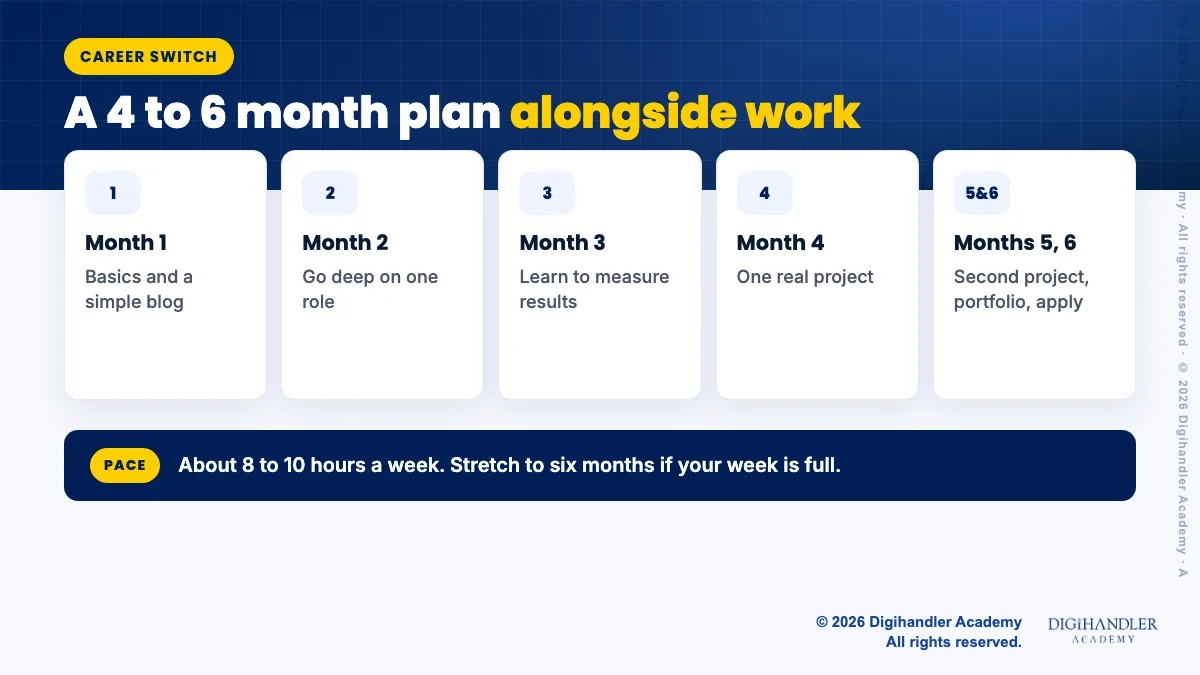
Plan for about 8 to 10 hours a week: one hour on most weekdays and a longer block on the weekend. Less than that and progress feels too slow to keep going. If your week is fuller, stretch the plan to six months. That is fine.
We will not quote salaries here. Pay in India changes a lot by city, company size and your proof of work, and a number in a blog post can mislead you. Check real job posts on Naukri, LinkedIn and Internshala for your city and target role instead. That gives you a live picture.
Be ready for one honest trade-off. Your first marketing job may pay less than your current job, especially if you have many years in another field. Your past experience helps you grow faster later, but the first step can be a step sideways.
So do not quit first. Learn while you still earn. Keep a few months of expenses saved before you move. Small freelance work for local businesses is a good way to test the field before you jump, and our guide to getting your first freelancing client shows how to start.
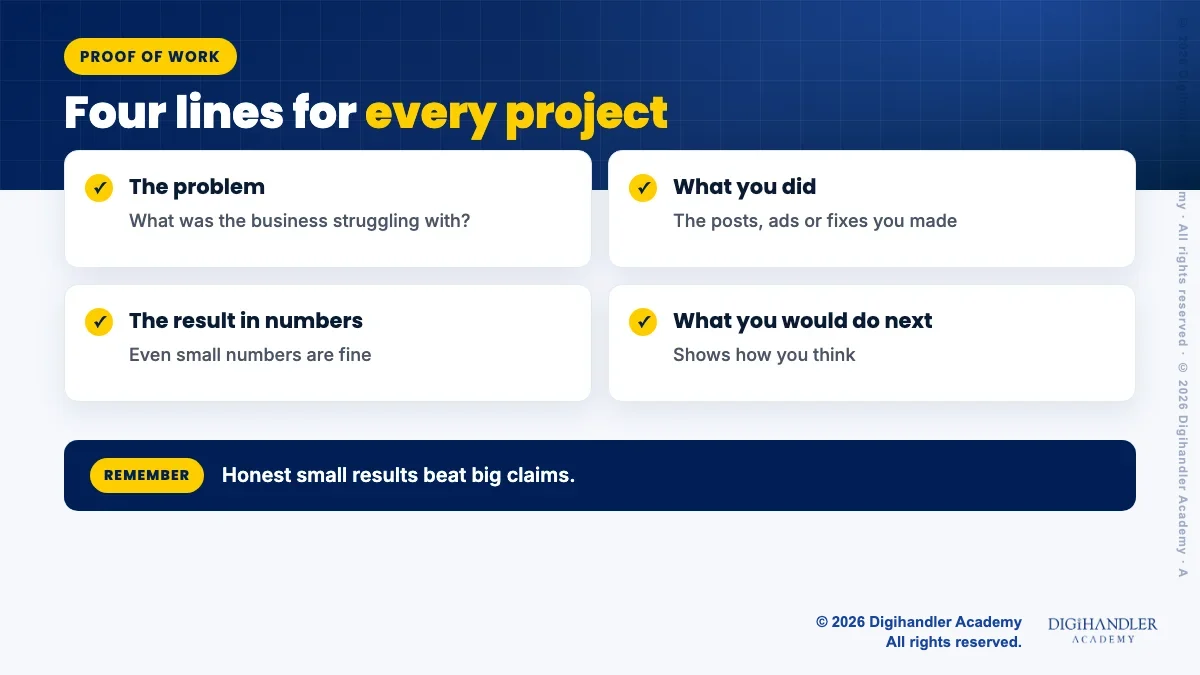
Proof of work means small, real results you can show. It matters more than any certificate, because it shows how you think.
Good proof is simple. A Jaipur boutique's Instagram plan for one month, with the posts you made and what happened. A Rohtak coaching centre's Google Business Profile you cleaned up. Ten reels you edited, using the basics in our reels editing guide. A one page report reading a demo analytics account.
For each project, write four lines: the problem, what you did, the result in numbers, and what you would do next. Even small numbers are fine. Honest small results beat big claims.
Most digital marketing job posts ask for skills and samples, not a marketing degree. Read ten posts for your target role and see for yourself.
Age is a common worry for people in their 30s and 40s. Your age comes with things freshers lack: you have handled bosses, customers, deadlines and pressure. Many small businesses prefer someone mature who understands their customers. Lead with that.
A career gap, for example after raising children, is also common. Say it plainly in one line and move to what you have learned and built since. Recent proof answers the question better than any explanation.
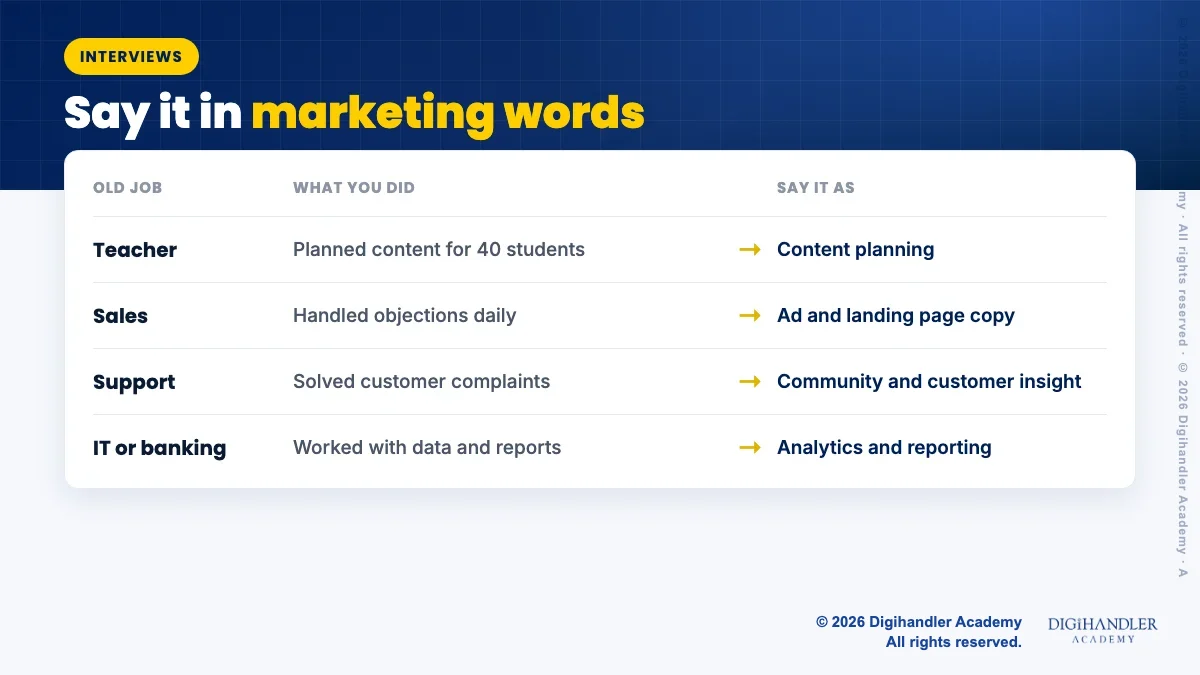
Do not apologise for your past. Translate it. An interviewer wants to hear how your old work makes you better at this one.
Use a short story: why you moved, what you learned, and one project with a result. Then connect your old job to the role in marketing words. Practise with common digital marketing interview questions out loud before the real thing.
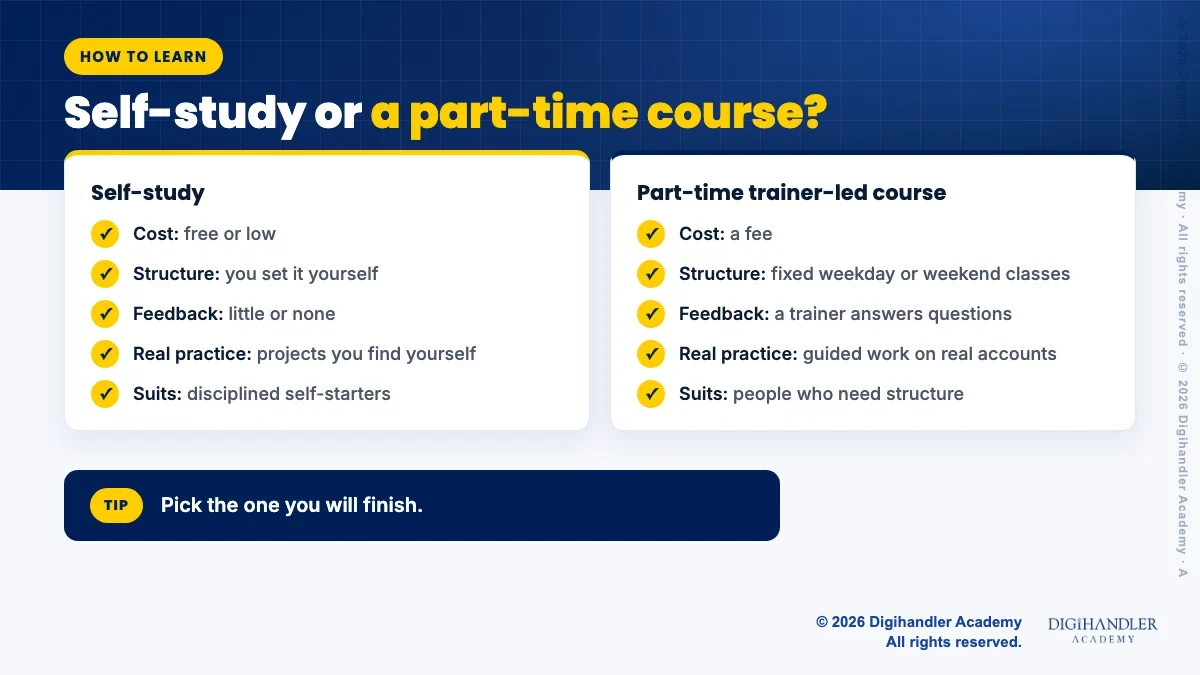
Both routes work. The right one depends on you, not on which is better in general.
Self-study is cheap or free. Google's own Skillshop courses and free tools are a good base. It suits people who are disciplined, can find their own projects and are fine without feedback. The risk is drifting for months without finishing anything.
A part-time, trainer-led course costs money but gives you a fixed schedule, a person to answer questions and practice on real accounts. It suits people who need structure after a long day at work. Read our guide to choosing a part-time digital marketing course for a checklist, including weekday versus weekend batches.
Whichever you choose, try before you pay. Many institutes, including ours, offer a free demo class, so you can see the teaching style first. You can see what our full digital marketing course covers if you want a structured option.
Riya writes Digihandler Academy's guides and roadmaps. Every article is fact-checked and reviewed by Lovish Madaan, founder & trainer, who has run the Digihandler agency since 2018. More from Riya →
Yes. Many people move into digital marketing from teaching, sales, customer support, IT or banking with no marketing job behind them. Employers mainly look for skills and proof, not past job titles. Start by learning the basics of one role, such as social media or ads, then do one or two small real projects for local businesses. Write down the problem, what you did and the result. A short portfolio of real work is what turns no experience into some experience.
A realistic plan for someone with a full time job is 4 to 6 months at about 8 to 10 hours a week. The first two months go to basics and one chosen role, the third to measuring results, and the last months to real projects, a portfolio and applying. It can take longer if your week is busy, and that is fine. Steady weekly hours matter more than speed, so pick a pace you can keep.
No. Digital marketing has no age limit, and job posts usually ask for skills and samples rather than age. People in their 30s and 40s bring things freshers often lack: experience with customers, deadlines, teams and pressure. Many small businesses value that maturity. The key is to show recent proof of work, such as a social media plan or a small ad campaign you ran, and to explain how your past job makes you better at marketing.
Possibly, at first. If you have many years in another field, your first marketing role may pay less than your current job, because you are starting at a junior level. Pay varies widely by city, company and proof of work, so check current job posts on Naukri, LinkedIn and Internshala for your city. To lower the risk, learn while you are still employed, keep some savings, and try small freelance projects before you switch.
Usually not. Most digital marketing job posts in India ask for practical skills, tool knowledge and samples of work rather than a marketing degree. Graduates from commerce, arts, engineering and other fields work in the field. What helps more is a small portfolio: posts you planned, ads you ran, a report you made from an analytics account. Free certifications can support your profile, but real projects carry more weight in interviews.
Where AI genuinely saves marketers time on real client work, and where it quietly makes things worse.
Read article →
What decides whether an AI assistant quotes your page, and the fixes worth doing first.
Read article →