AI in digital marketing: what actually works right now
Where AI genuinely saves marketers time on real client work, and where it quietly makes things worse.
Read article →
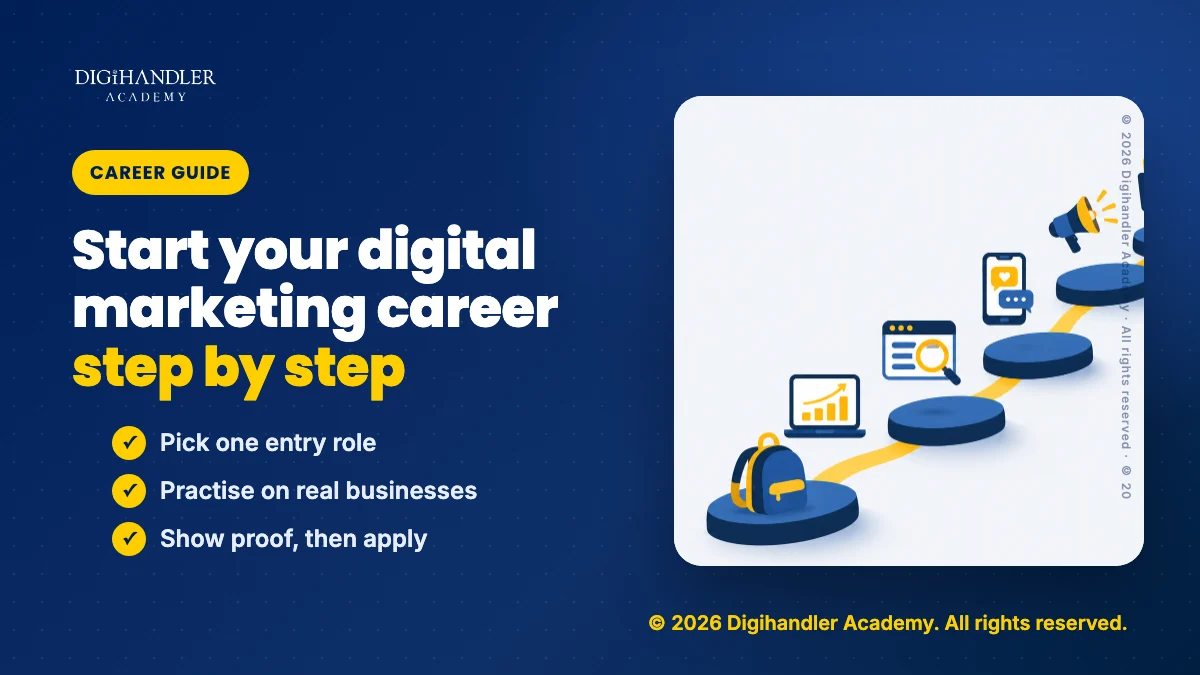
A digital marketing career for freshers does not start with a certificate. It starts with one skill, one real business to practise on, and proof that you got a result. This guide shows the full path in plain steps: what the job really is, which entry roles exist, what to learn first, a realistic 6-month plan, and where to find your first internship or job in India.
Digital marketing means helping a business get customers through the internet: Google search, Instagram, YouTube, WhatsApp, email and websites. The glamour on social media hides the real work. Most days are quiet, careful and full of small tasks.
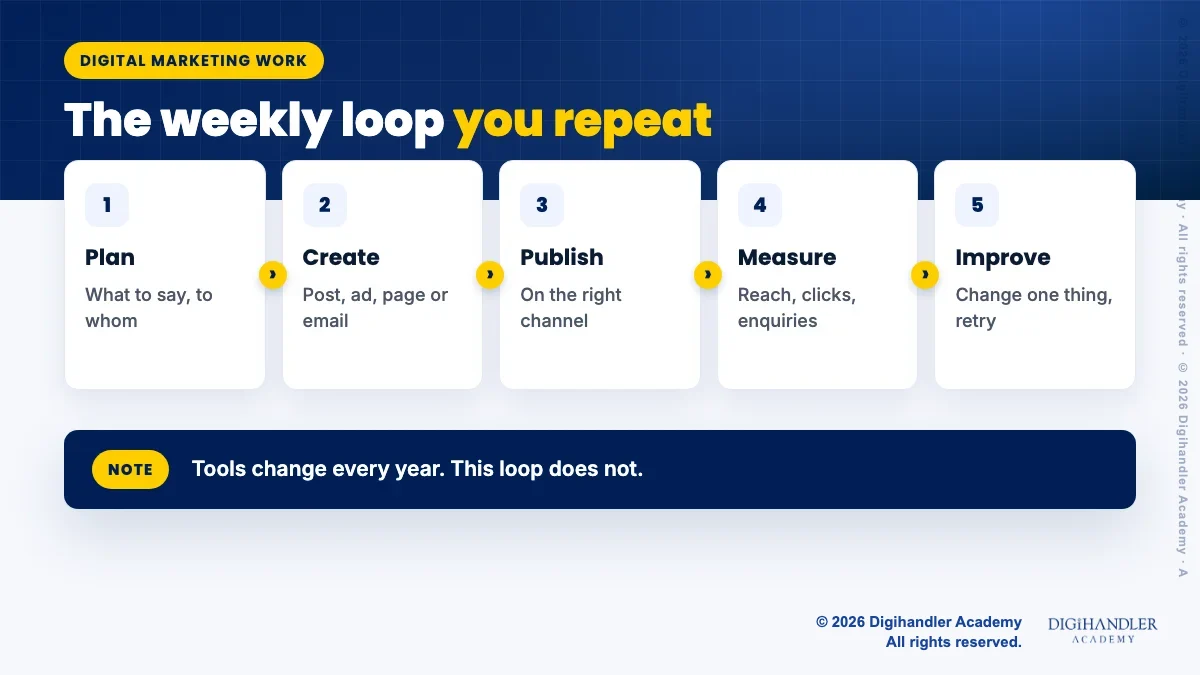
Think of it like running a small shop's notice board, but online and with numbers attached. You plan what to say, you make the post or the ad, you publish it, and then you check what happened. Then you change something and try again.
A fresher's week might include writing ten captions for a Rohtak coaching centre, fixing the page titles on a clinic website, checking which Instagram reel brought enquiries, or making a simple weekly report in Google Sheets. The tools change. The loop of plan, make, publish, measure and improve does not.
Job portals use many titles, but most fresher openings fall into five families. You do not need all five. Pick one as your main skill and learn a little of the others.
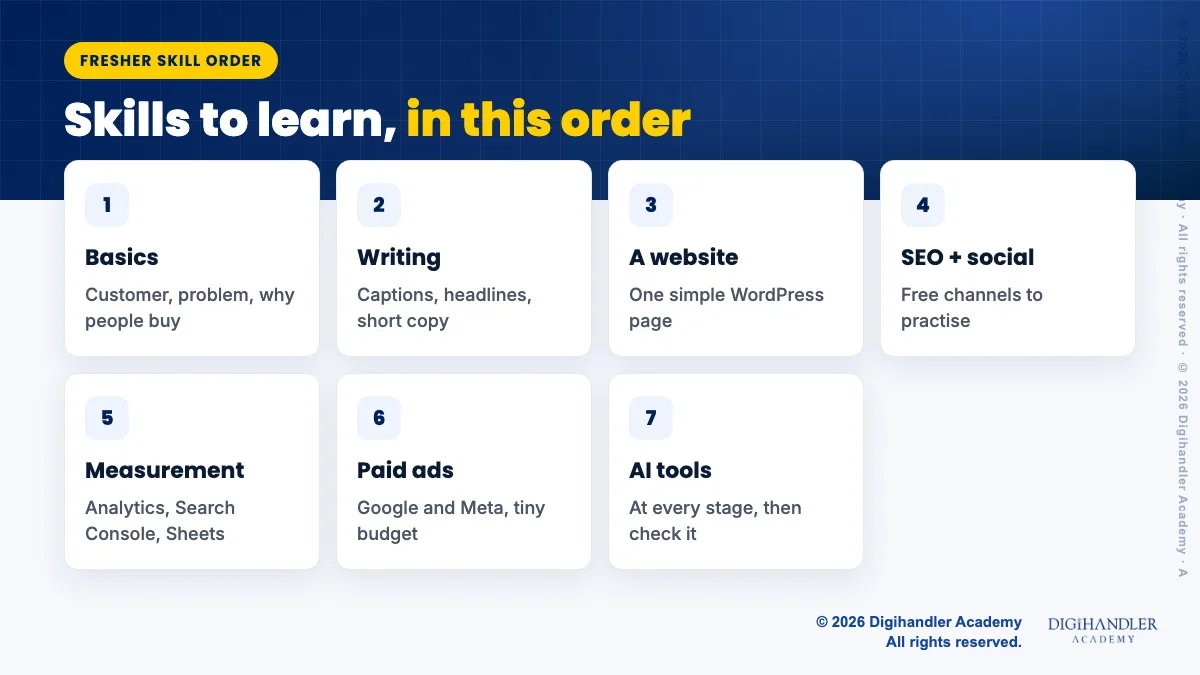
Order matters more than speed. Many freshers jump straight into ads, spend money and learn very little. A better order builds each skill on the one before it.
There is real demand, but read the numbers carefully. The TeamLease EdTech Career Outlook Report for January to June 2026 surveyed employers about their plans. 62% of employers in the Marketing and Advertising sector said they intend to hire freshers in that half year, a little lower than 67% for July to December 2025.
That figure measures hiring intent, not actual hires. An employer who plans to hire may hire one person or none. Still, it tells you marketing employers are open to freshers.
The same report also notes that employers increasingly judge freshers on proof of work: tasks done, internships and real projects, not only degrees. That is good news if you are willing to build things. The rest of this guide is about exactly that.
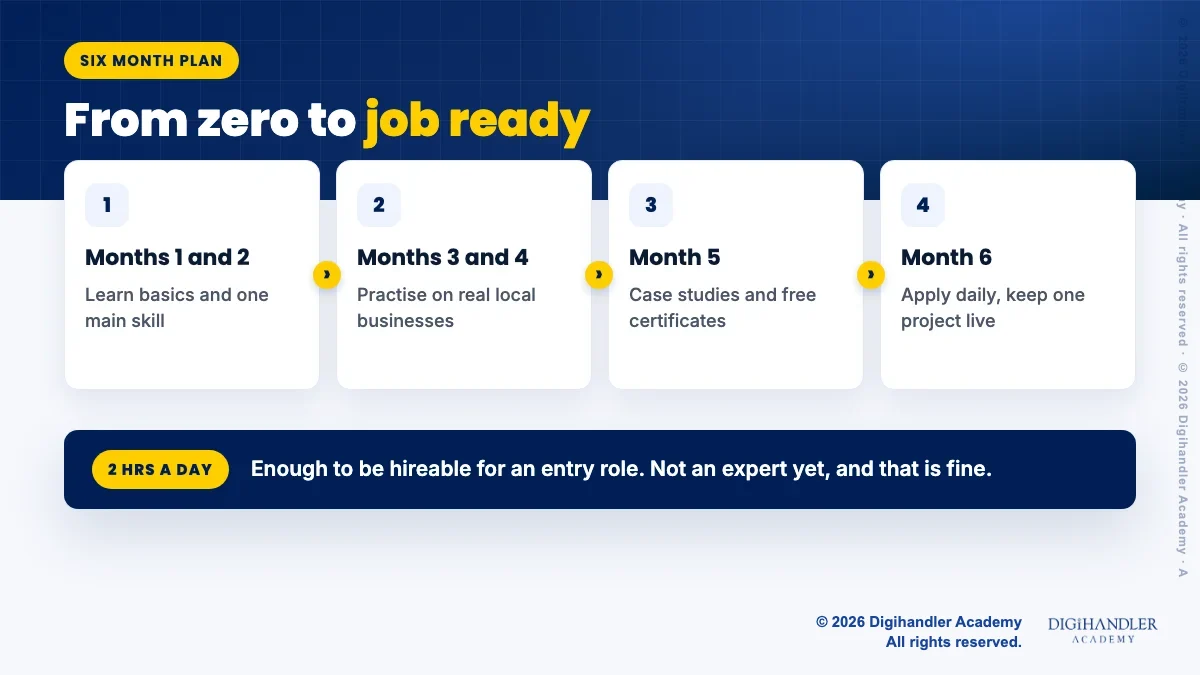
Six months is enough to become hireable for an entry role if you give it about two hours a day. It is not enough to become an expert, and that is fine. Employers hire freshers for attitude and basics, then train them.
Months 1 and 2: learn the basics and your main skill. Follow a clear path such as our digital marketing roadmap. If you are still in college, this guide for students after 12th shows how to fit it beside your degree.
Months 3 and 4: practise on real businesses. Ask a relative's shop, a local gym or a Jaipur boutique if you can manage their Google Business Profile or Instagram for free for six weeks. Real businesses teach things no video can: slow replies, small budgets and owners who change their mind.
Month 5: build proof. Turn each project into a one-page case study: the problem, what you did, and the result in numbers, even small numbers. Add two or three free certificates; our list of free certifications that actually help shows which ones employers recognise.
Month 6: apply every day, and keep one project running so you always have something fresh to talk about in interviews.
Proof of work is anything that shows you can do the job, not just talk about it. A recruiter spends very little time on each profile, so make it easy to see.
Collect every item below as a link on a one-page resume. Our fresher resume and portfolio guide shows a sample layout.
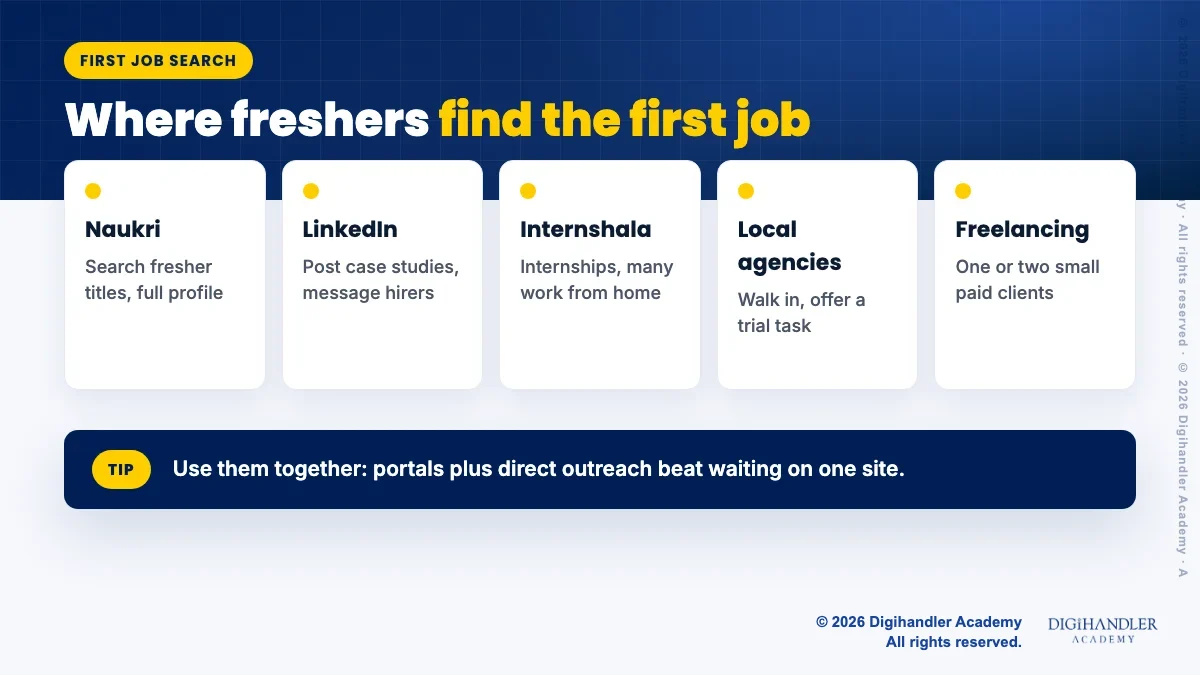
Use more than one channel at the same time. Each one works differently, so treat them differently.
Most freshers who struggle are not lazy. They just put effort in the wrong place. Watch out for these five.
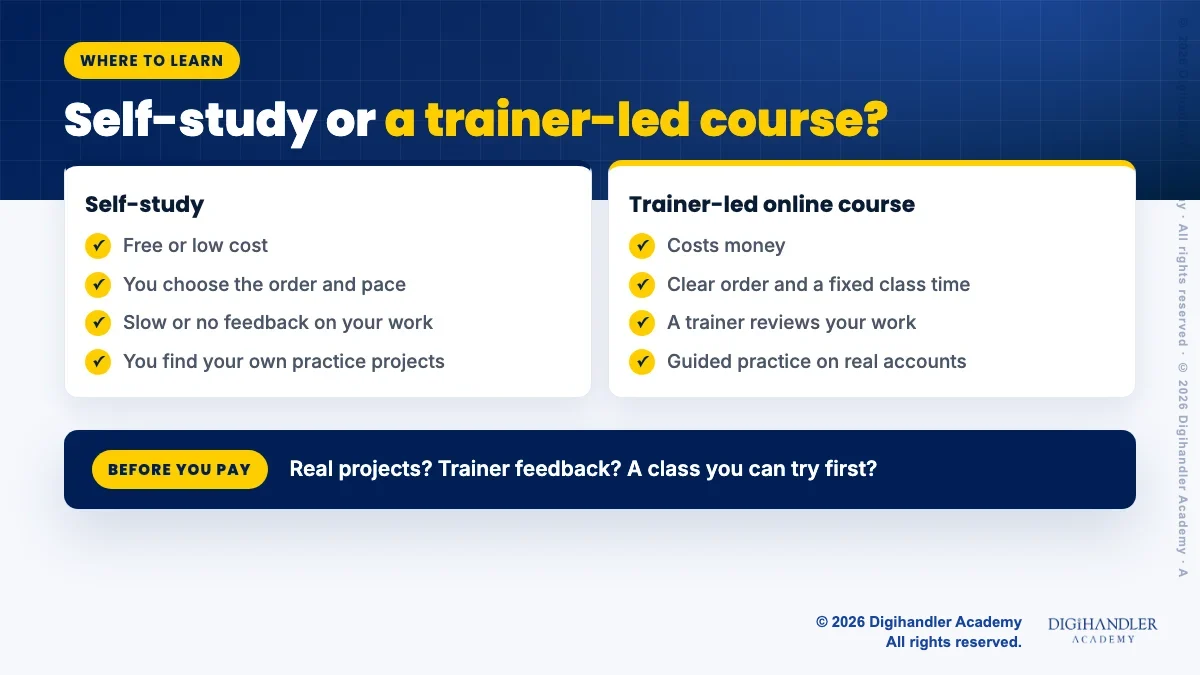
Both routes work. The right one depends on you, not on which is "better".
Self-study is free or cheap. Google, Meta and HubSpot all offer free lessons, and YouTube has a lot of good material. It suits people who are disciplined, can find their own practice projects and do not mind slow feedback. The risk is jumping between videos without ever finishing a real project.
A structured, trainer-led online course costs money but gives you an order to follow, a fixed class time, a trainer who checks your work and practice on real accounts. It suits people who want feedback and a routine. The risk is paying for a course that is only recorded videos with no real practice.
Before you pay anywhere, ask three questions. Will I work on real businesses or ad accounts? Will a trainer review my work? Can I attend a class before I pay? Digihandler Academy, for example, offers a free demo class for its digital marketing course, and any good institute should let you try first. Our full guide on how to learn digital marketing online covers free versus paid and live versus recorded in detail.

Riya writes Digihandler Academy's guides and roadmaps. Every article is fact-checked and reviewed by Lovish Madaan, founder & trainer, who has run the Digihandler agency since 2018. More from Riya →
Yes, many entry roles in India such as SEO trainee, social media executive and content writer are open to freshers. Employers know you have no job experience, so they look for proof that you can do the work instead. That proof can be a website you built, a social media page you grew for a local business, a sample ad plan or a small freelancing project. Two or three real projects with simple before and after numbers usually matter more than a long list of certificates.
There is no single best role. Social media and content roles are easy to start because you can practise for free and show your work quickly. SEO suits people who like research and patience. Performance marketing suits people who enjoy numbers and testing, but it needs some ad budget to practise. A good approach is to pick the one you enjoy most as your main skill, learn the basics of the others, and change direction later if you want.
For most freshers, about six months of steady effort is a realistic target to become ready for an entry level job or internship. That assumes around two hours a day: two months learning basics, two months practising on real businesses, one month building case studies and a resume, and one month applying. Some people get an internship sooner. You will keep learning on the job, because tools and platforms change every year.
Many digital marketing employers care more about skills and proof of work than about which degree you have. Students from commerce, arts and science backgrounds all work in this field. Some larger companies do ask for a graduate degree in their job posts, so finishing your degree is still wise if you are studying. The best plan for a student is to complete the degree and build digital marketing skills and real projects side by side.
No. You can learn digital marketing through free lessons from Google, Meta and HubSpot, YouTube and practice on real local businesses. A paid, trainer-led course helps if you want a fixed routine, a trainer who reviews your work and guided practice on real ad accounts. Before paying, check that the course includes live classes or real feedback, real projects and a free demo class. Avoid any course that guarantees a job or a fixed salary.
Where AI genuinely saves marketers time on real client work, and where it quietly makes things worse.
Read article →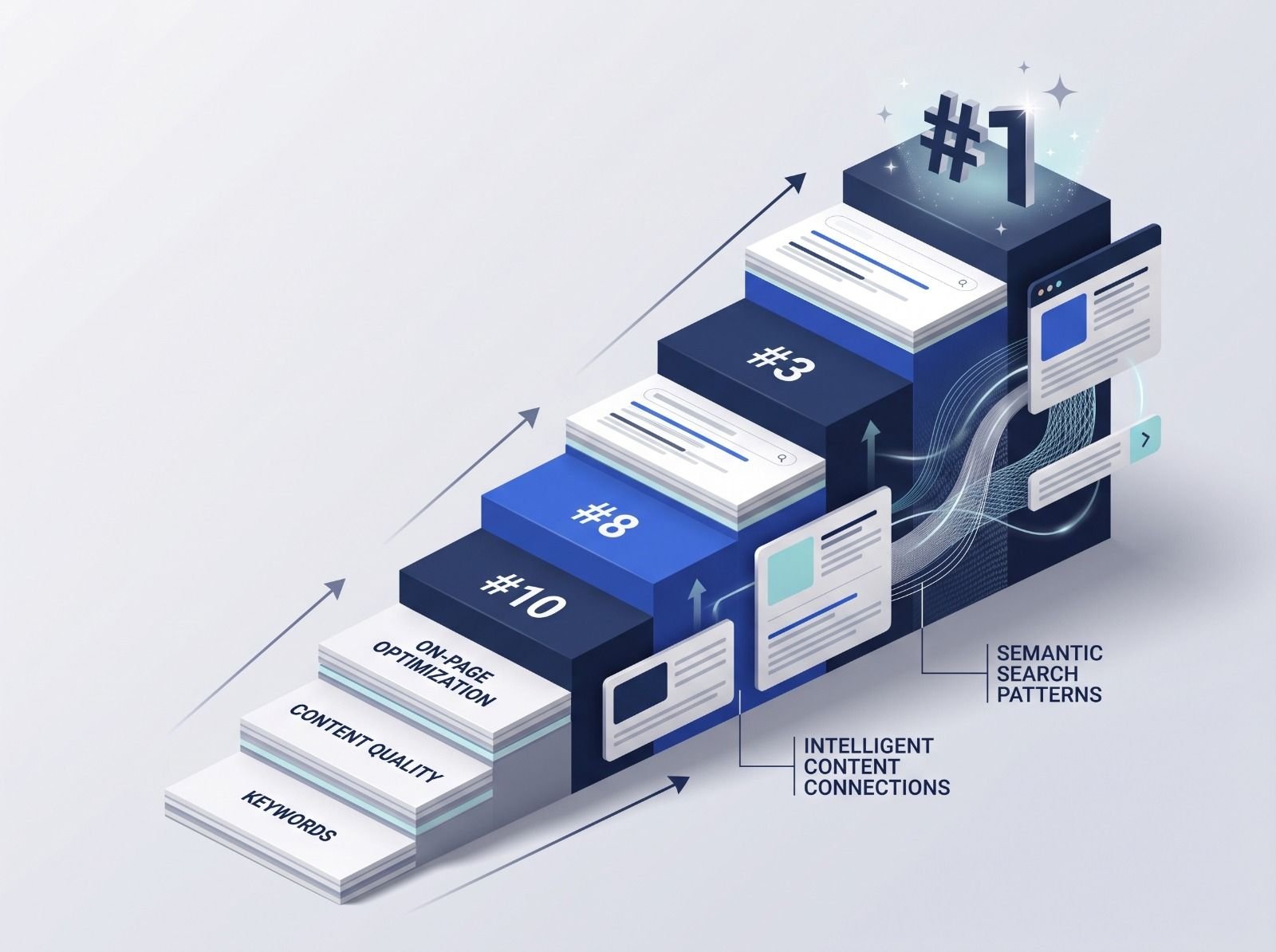
What decides whether an AI assistant quotes your page, and the fixes worth doing first.
Read article →