AI in digital marketing: what actually works right now
Where AI genuinely saves marketers time on real client work, and where it quietly makes things worse.
Read article →
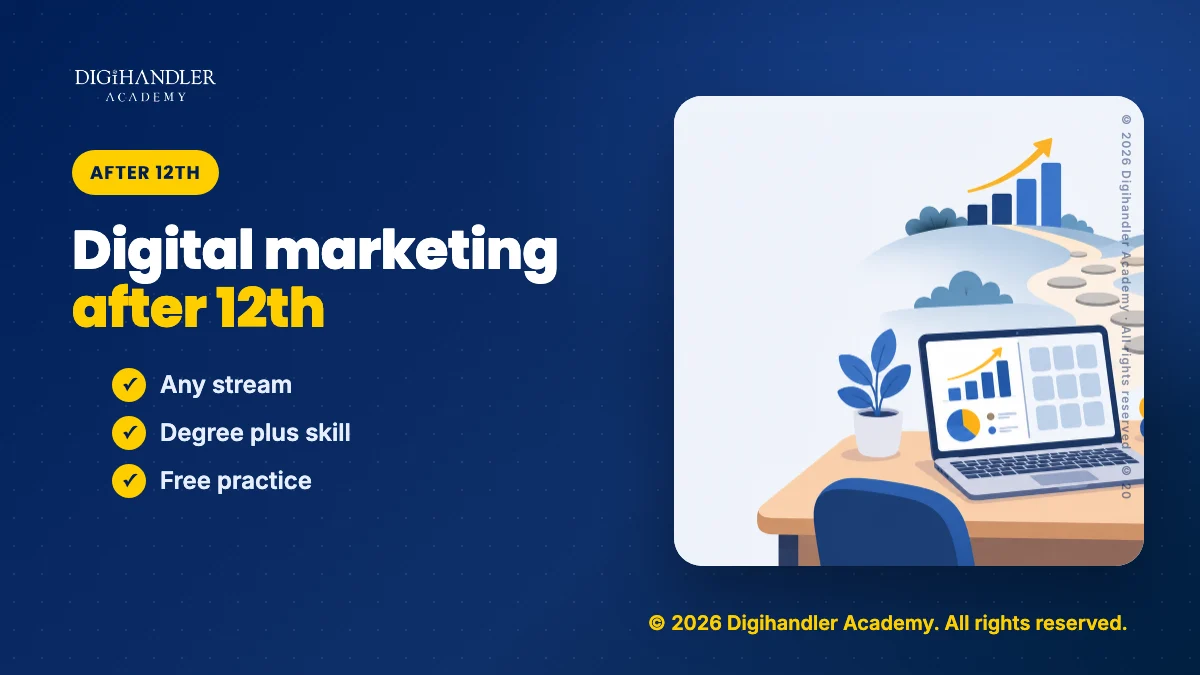
Digital marketing after 12th is a sensible choice for many students, whatever stream you studied. But it works best as a skill you build next to a degree, not as a shortcut around one. This guide gives you honest answers: what parents worry about, what to learn first, how to practise for free, and what a first internship really looks like.
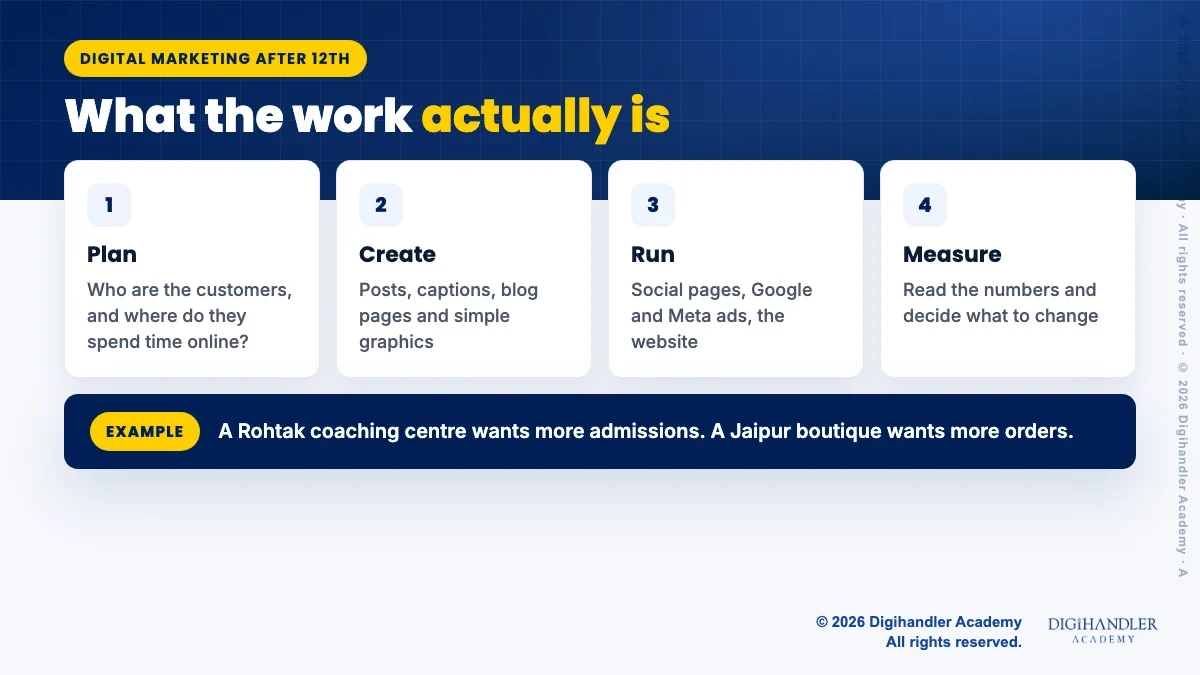
For most students, yes, as long as you see it clearly. Digital marketing is the work of helping a business get found and chosen online. A coaching centre in Rohtak wants more admissions. A boutique in Jaipur wants more orders on Instagram. Someone has to plan the posts, run the ads, fix the website and read the numbers.
That work exists in almost every town now, not only in big cities. And you can start learning it at 17 or 18 with a laptop, an internet connection and patience.
The honest catch: a certificate alone does not get you hired. Employers look at what you have actually done. So the real question is not "Is it a good career?" but "Will I practise enough to show proof?" For the full step-by-step picture, read our complete guide to a digital marketing career for freshers.
Yes. No stream is required, and no stream is a disadvantage. Each one gives you a small head start in a different place.
These are head starts, not rules. A science student can become a fine writer, and an arts student can love spreadsheets. Your stream shapes your degree options, not your marketing future.
Parents usually worry because they care, and because this career barely existed when they were choosing theirs. Here are four common worries, with straight answers.
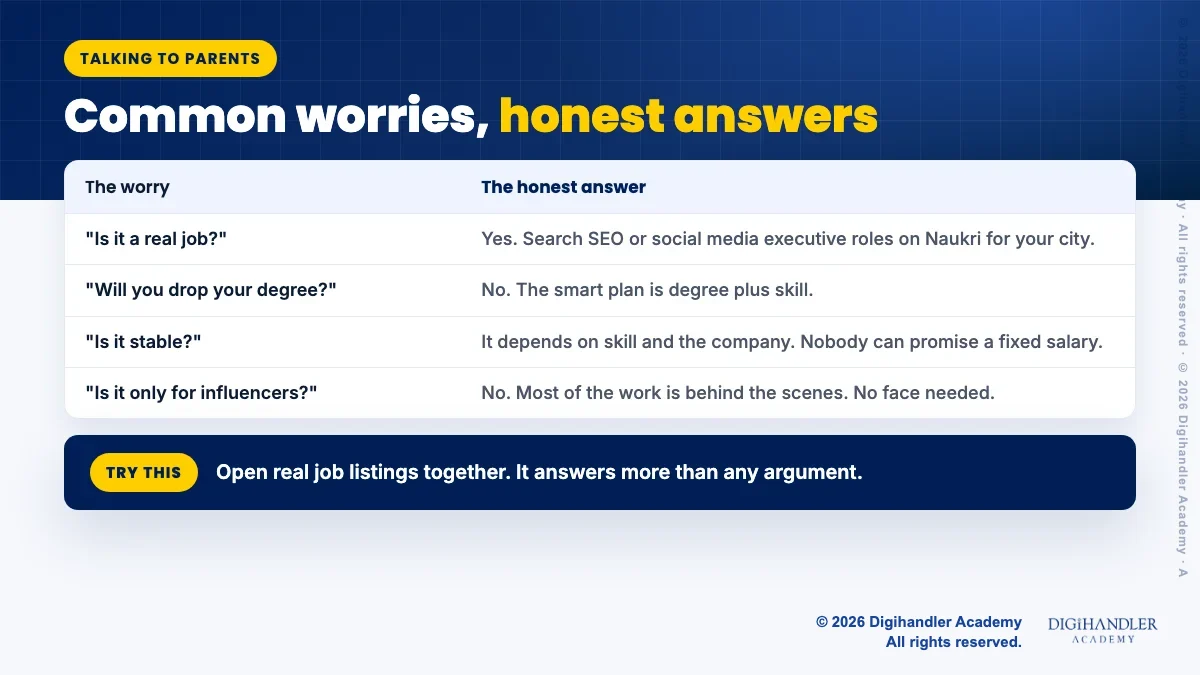
Yes, and for most students this is the best route. A BBA, BCom or BA gives you a recognised qualification. Digital marketing skills give you something practical to show. Together they make a stronger profile than either one alone.
Many universities now follow the UGC Curriculum and Credit Framework for Undergraduate Programmes, which includes skill courses and internships as part of the degree. Each university applies it in its own way, so read your own college's rules.
UGC guidelines, last updated in 2025, also allow a student to pursue two academic programmes at the same time. For example, one full-time degree in college and one online or distance programme from a recognised institution. Your university must have a system for this, so ask before you enrol.
If you are comparing formats, this guide to online vs offline digital marketing courses lists what to check before paying anyone.
Outside formal degrees, you have three common ways to add the skill:
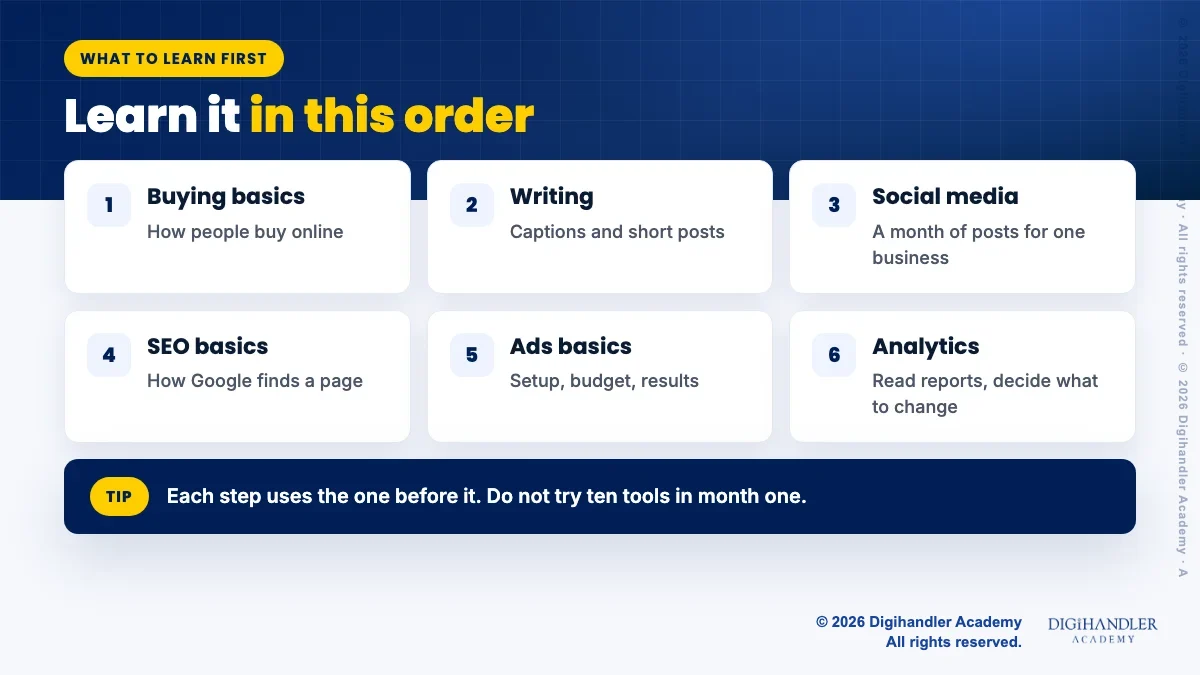
Do not try to learn ten tools in your first month. Learn in this order, so each step uses the one before it. For a weekly study routine, see how to learn digital marketing online properly.
Think of it like learning to cook. Videos help, but you only improve by cooking real meals. These free options give you real practice.
Most first internships are small and practical. You might help a local agency, a startup or a small business, often remote or part-time. Listings appear on Internshala, LinkedIn and Naukri.
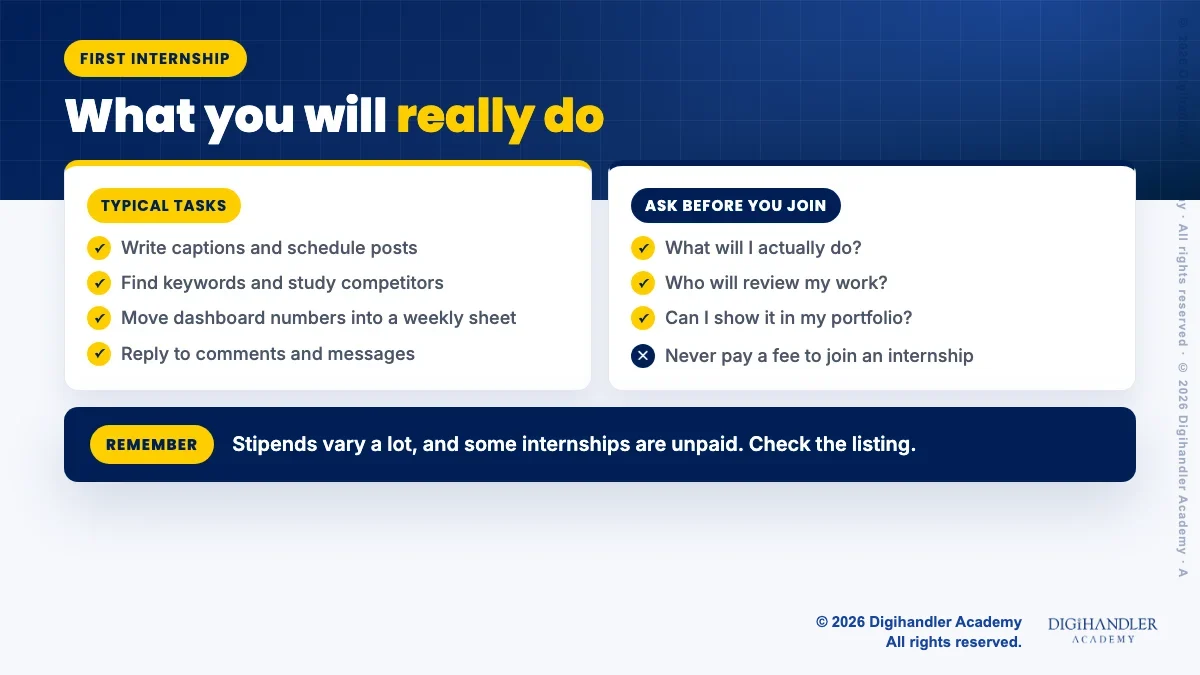
Stipends vary a lot, and some internships are unpaid. Before you join, ask three things: what you will actually do, who will review your work, and whether you can show it in your portfolio. Walk away from any "internship" that asks you to pay a fee to join.
In the first few weeks, expect tasks like these:
Go into the conversation with a plan, not just excitement. Parents relax when they see you have thought it through.
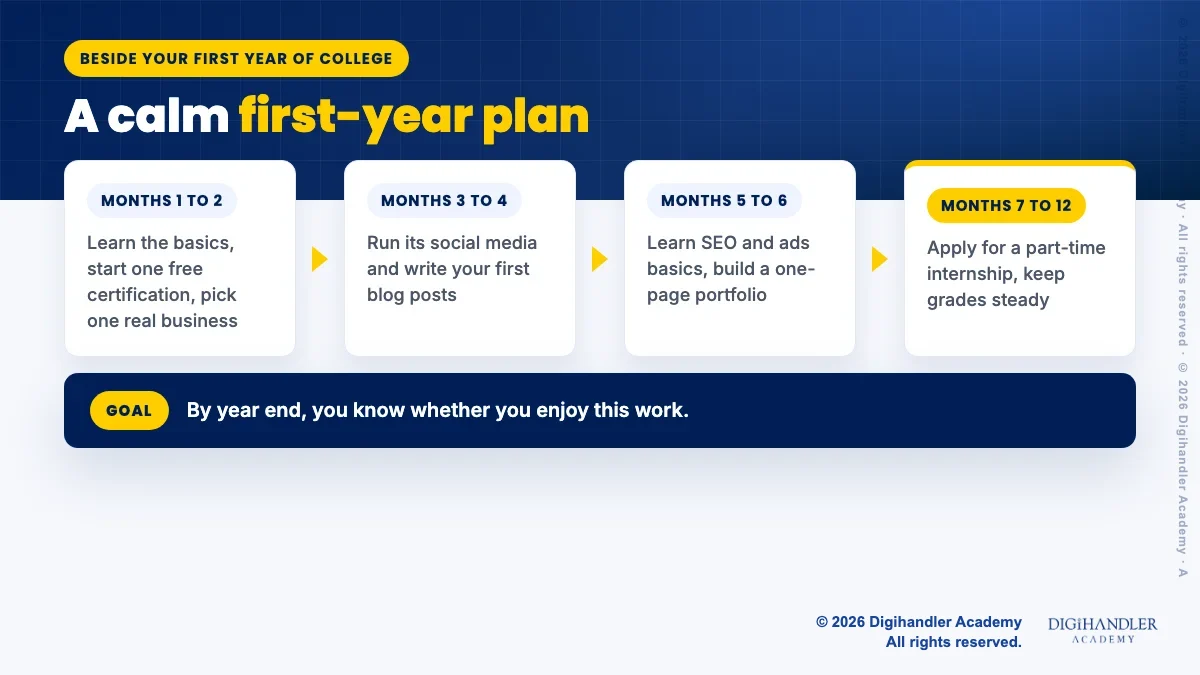
Here is a simple plan to follow beside your first year of college. Slow it down during exams; that is normal.
The goal is not perfection. By the end of the year you will know whether you enjoy this work, and that answer alone is worth the effort.
Riya writes Digihandler Academy's guides and roadmaps. Every article is fact-checked and reviewed by Lovish Madaan, founder & trainer, who has run the Digihandler agency since 2018. More from Riya →
Yes, you can learn digital marketing and even freelance without a degree, because the work is judged mostly on results you can show. But skipping a degree closes some doors. Many employers still list graduation as a requirement, and government exams and higher studies need it. For most students the safer plan is to join a BBA, BCom or BA and build digital marketing skills alongside it. You keep your options open and still start gaining real experience from your first year of college.
No stream is best, and none is required. Arts students often find writing, content and social media easier. Commerce students usually grasp ad budgets, costs and online selling quickly. Science students tend to be comfortable with analytics and testing. These are small head starts, not limits. What matters far more is whether you practise on real pages, keep a proof folder of your work, and keep learning as tools change. Any stream can reach the same entry-level roles.
It can be, if it gives you live teaching, feedback on your work and practice on real businesses. A course that only hands you videos and a certificate adds little that free resources do not already offer. A good approach is to start free for a month or two, confirm you enjoy the work, and then decide. If you pay, choose a format that fits around college, such as weekend or evening batches, and sit a demo class before you commit any money.
Yes. Most digital marketing courses run on weekends or evenings so they fit around college, and self-study fits anywhere. If you want a second formal academic programme, UGC guidelines allow a student to pursue two programmes at once, such as a full-time degree plus an online or distance programme from a recognised institution. Your university must allow it, so check its rules first. Many colleges also include skill courses and internships within the degree under the UGC undergraduate framework.
There is no fixed figure, and you should be careful with anyone who promises one. Pay depends on your city, the company, your role and, most of all, the proof of work you can show. Internship stipends vary widely, and some internships are unpaid. The most reliable way to see current numbers is to search entry-level roles such as social media executive or SEO executive on Naukri, LinkedIn or Internshala for your own city and read the listed pay ranges.
Where AI genuinely saves marketers time on real client work, and where it quietly makes things worse.
Read article →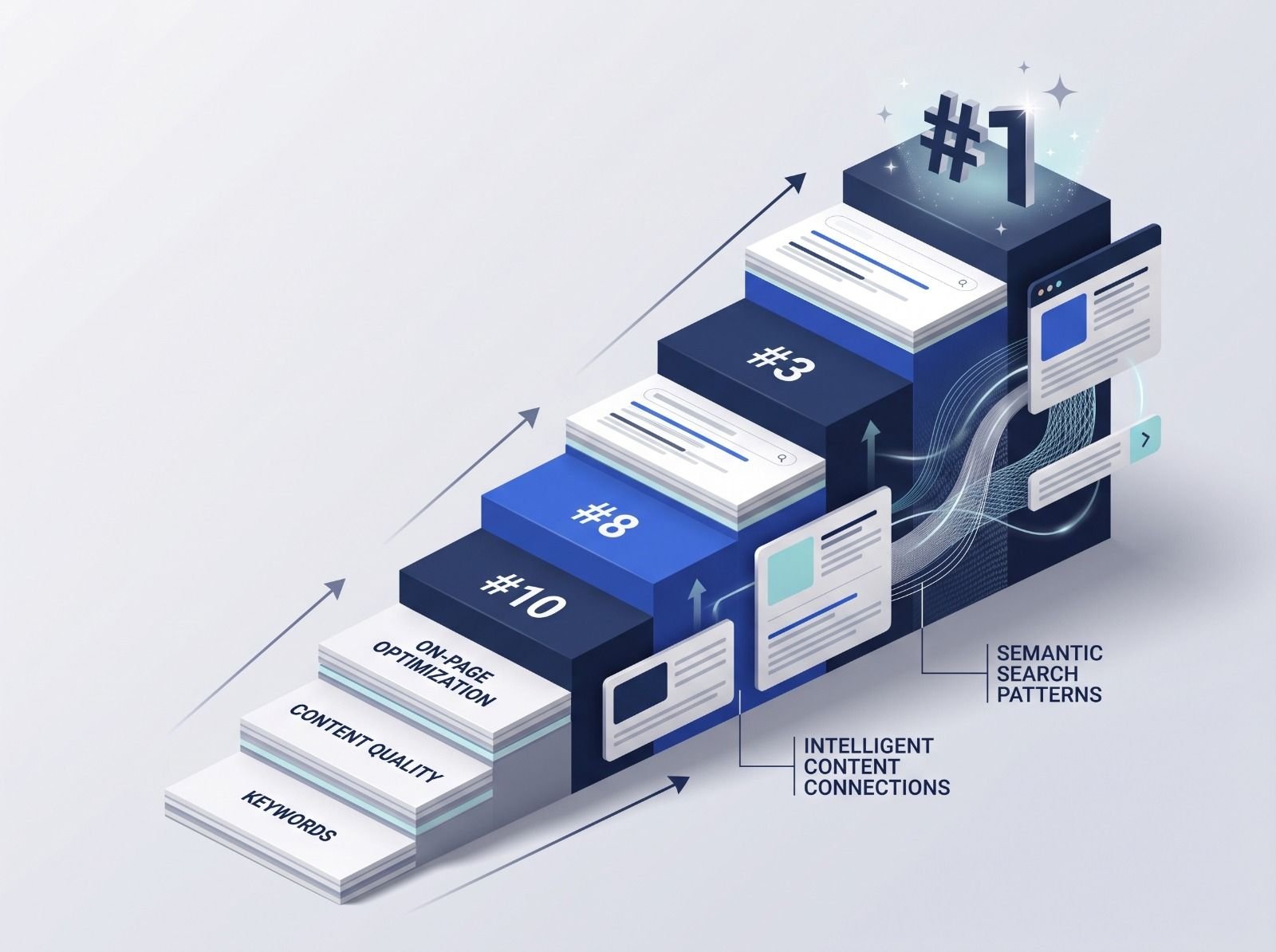
What decides whether an AI assistant quotes your page, and the fixes worth doing first.
Read article →