
AI in digital marketing: what actually works right now
Where AI genuinely saves marketers time on real client work, and where it quietly makes things worse.
Read article →
A digital marketing internship is often the first real step from learning to working. You do not need a degree in marketing or a big network to get one. You need a little proof of work, a short honest message, and a plan for where to look. This guide covers all three, plus the warning signs that tell you an offer is not worth your time.
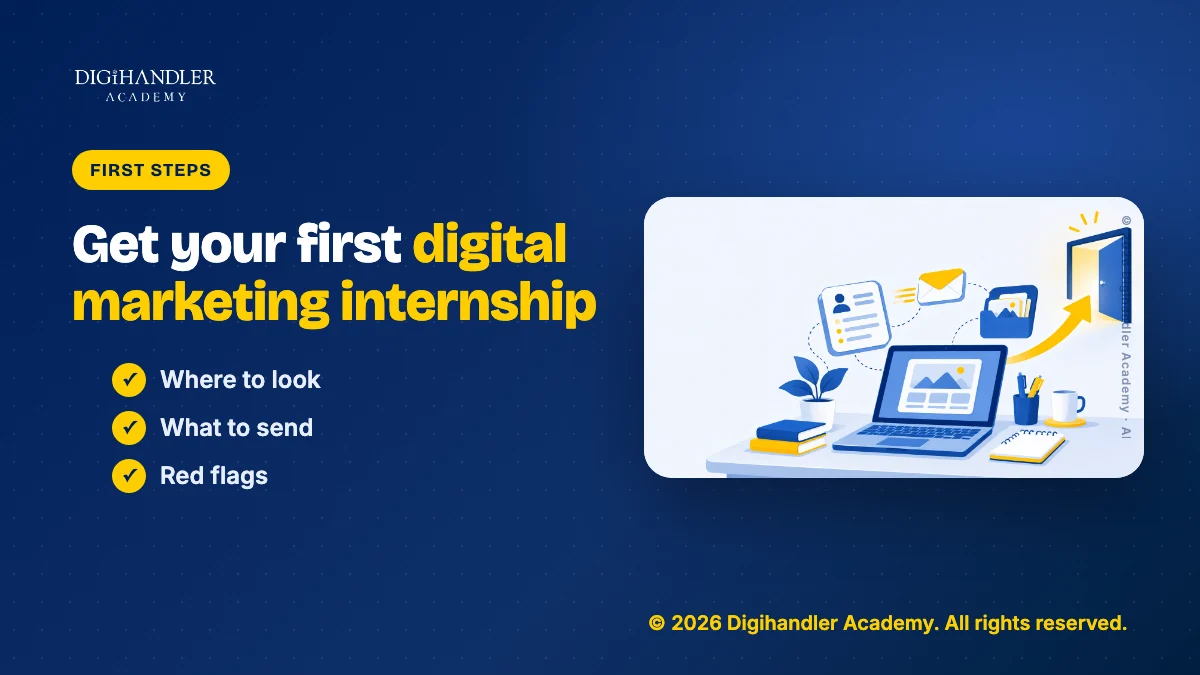
Before you apply, it helps to know what the work looks like. Most interns do not run big ad budgets on day one. They help a small team with the daily jobs that keep marketing moving.
Think of it like a kitchen. The head chef plans the menu. The new cook chops, measures and plates, and learns the menu by doing. As an intern, you learn marketing the same way.
The best way to show you can do these tasks is to have done a few already. Our guide to free digital marketing projects for students gives you ten small projects you can finish before you apply.
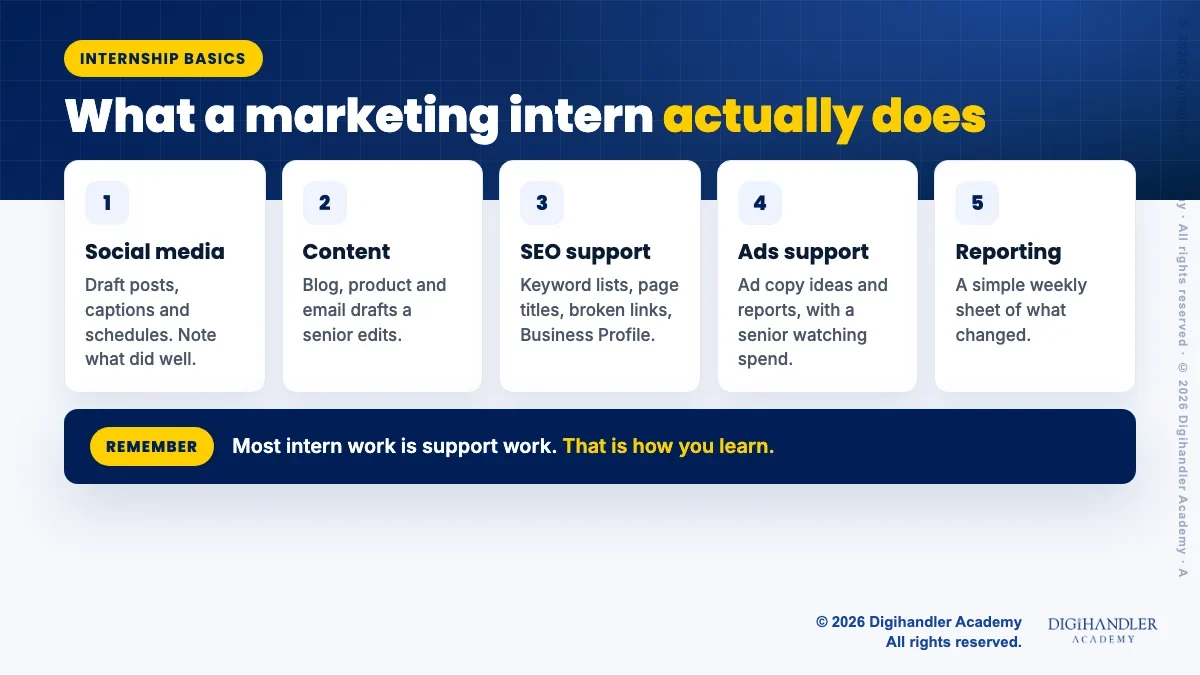
Do not depend on one place. Use two job platforms plus direct outreach. Direct outreach often works best for freshers, because small businesses rarely post openings at all.
On any platform, read the full listing. If a listing asks specific questions, answer those questions properly. A generic answer is the fastest way to be skipped.
Send three small things, not one big file. A one-page resume, a short note, and a link to your work.
Your resume should list skills you have actually used and the projects you finished. Our guide to a digital marketing resume for freshers shows how to write it with no job history.
Your portfolio can be a simple Google Drive folder or a free one-page site. Put two or three projects in it. For each, write what the problem was, what you did, and what happened. Use honest numbers, even small ones. "Reach went from 300 to 900 in a month" is better than "grew the brand".
Keep the note short. A busy owner reads the first two lines on their phone. If those lines do not say who you are and what you can do for them, they move on.
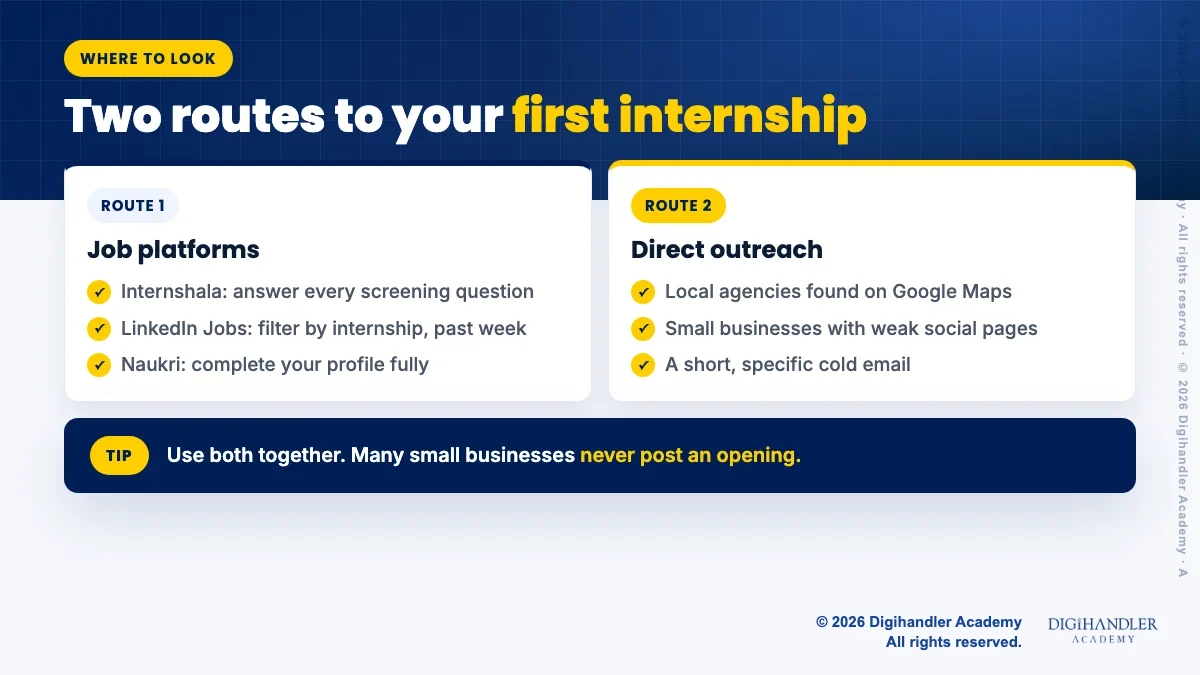
Cold emails work when they are short, specific and about the business, not about you. Look at their website and Instagram first. Find one small thing you could improve.
Here is a template. Change every part in brackets. Never send the same email to fifty people.
Subject: Intern help for [business name]'s Instagram
Hi [name], I am [your name], a [student or fresher] in [city] learning digital marketing. I noticed [one specific thing, like: your last few posts have no captions about fees or timings]. I made two sample posts for you to show what I mean: [link]. I would like to intern with you for [duration] and help with [one or two tasks]. Here is my short portfolio: [link]. Could we talk for 10 minutes this week? Thank you, [name, phone].
Send it on WhatsApp Business too if the business lists that number for enquiries. If you get no reply, follow up once after about a week. After that, move on politely.
Intern interviews are usually simple. The interviewer wants to know three things. Can you learn fast? Will you finish tasks? Do you understand the basics?
Prepare to talk through one project in detail. Say what you tried, what did not work, and what you would change. Honest mistakes show more learning than a perfect story.
Also study the business before the call. Look at their website, social pages and Google reviews. Have one idea ready for them. You can practise common questions with our list of digital marketing interview questions.
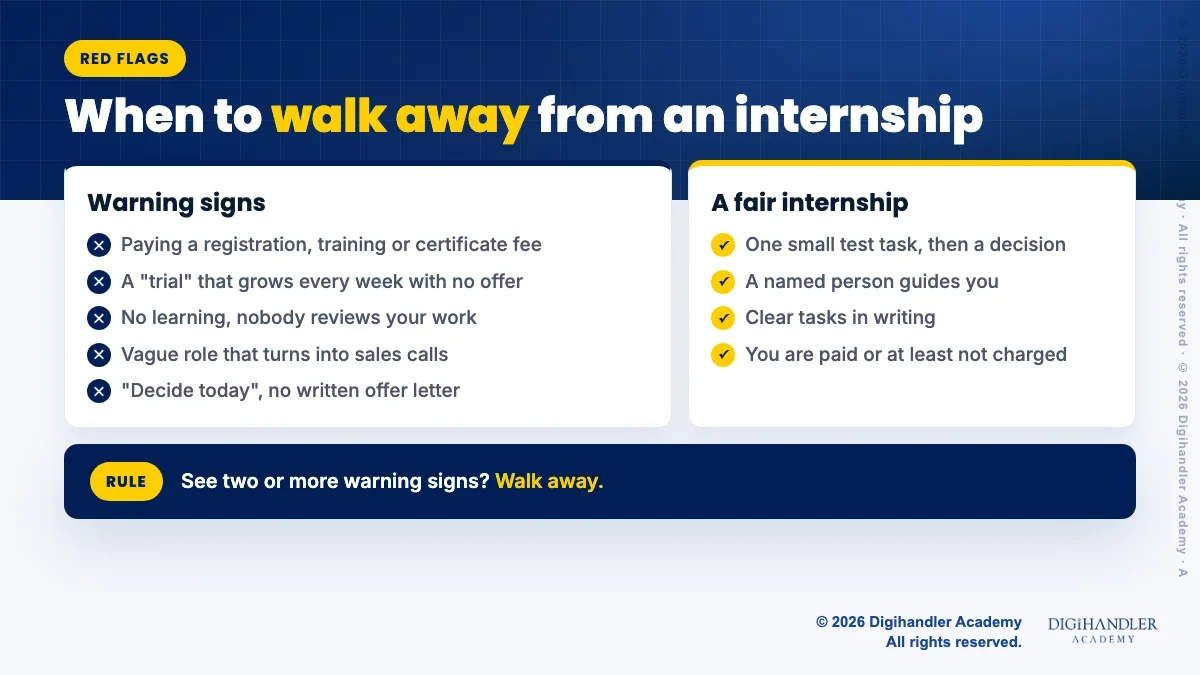
Most internships are fair. Some are not. Learn the warning signs, so you can say no with confidence.
A simple rule: an internship should trade your time for learning, and sometimes a stipend. If you are giving time and getting neither, it is not an internship.
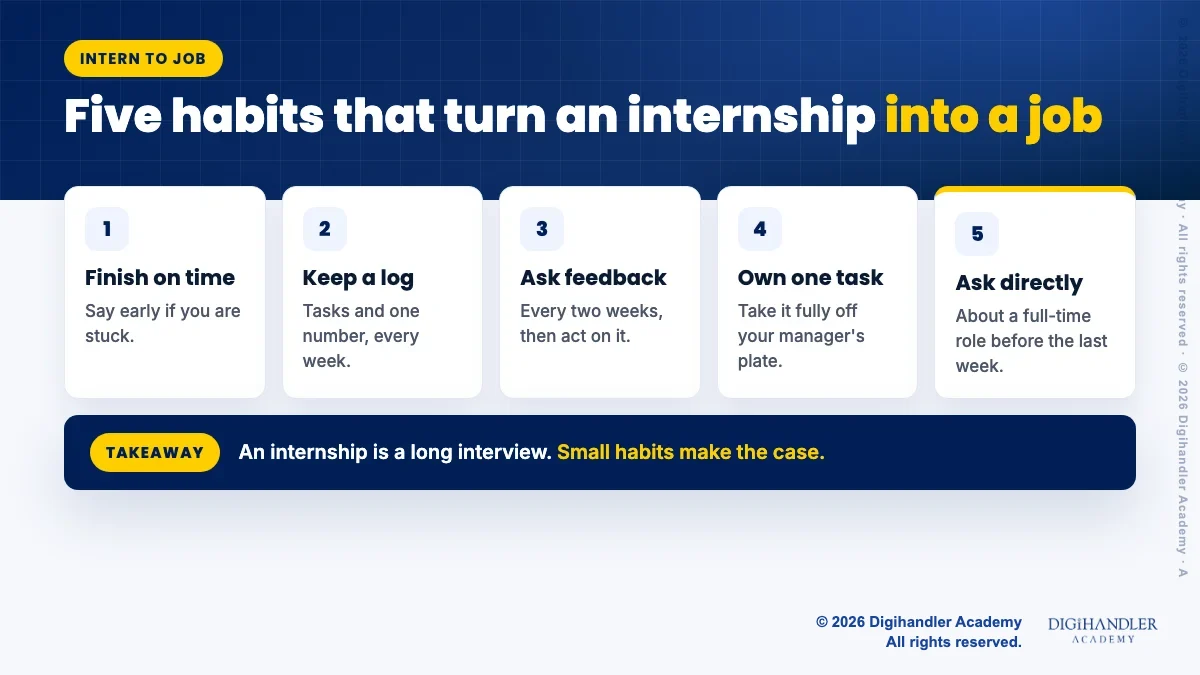
An internship is a long interview. The team is watching how you work, not just what you know. Small habits matter more than big ideas.
Keep a simple work log. Every week, write what you did and one number that changed. At the end, you have a ready list of results for your resume and LinkedIn.
Near the end, ask your manager directly: "Is there a chance of a full-time role, and what would I need to show?" Many interns never ask. If there is no opening, ask for a written letter and permission to show your work in your portfolio.
Also notice which tasks you enjoyed most. That tells you what to learn next. Our guide to digital marketing skills in demand shows which skills employers ask for in entry-level roles.
Then start with skills, not applications. Spend four to six weeks learning the basics and doing two or three small projects. Free resources and self-study can take you a long way if you stay consistent.
Some people learn faster with a trainer who checks their work. If that is you, a free demo class at a training institute is a low-risk way to see if a structured digital marketing course suits you. Either way, the goal is the same: real work you can show.

Riya writes Digihandler Academy's guides and roadmaps. Every article is fact-checked and reviewed by Lovish Madaan, founder & trainer, who has run the Digihandler agency since 2018. More from Riya →
Start by doing two or three small practice projects, such as running a local shop's Instagram for a month or writing blog posts for a friend's business. Put them in a simple portfolio with honest results. Then apply on internship platforms like Internshala, LinkedIn Jobs and Naukri, and send short, specific cold emails to local agencies and small businesses. Answer every screening question properly instead of pasting a generic reply. Most freshers who get internships combine platform applications with direct outreach rather than relying on one source.
No. An internship is work you do for a business while you learn, so the business should not charge you for it. If someone asks for a registration fee, training fee or certificate fee before you can intern, treat it as a red flag. Paying for a training course is a separate, open choice that you make knowingly. But an employer charging you to work for them is not a fair internship. Ask questions, ask for a written offer letter, and walk away if the answers are vague.
A digital marketing intern usually supports a small team. Typical tasks include drafting social media posts and captions, scheduling content, writing blog or email drafts, doing keyword research, updating Google Business Profile details, collecting ad copy ideas and building simple weekly reports. Seniors usually review the work before it goes live. The exact mix depends on the company. An agency intern may touch many clients, while an intern at a single brand may go deeper into one or two channels.
You do not need a fancy portfolio, but you do need some proof of work. A Google Drive folder or a free one-page website with two or three projects is enough. For each project, explain the problem, what you did and what happened, using honest numbers even if they are small. Employers hiring interns know you are new. What they want to see is that you can finish a task, think about results and explain your work clearly.
Treat the internship like a long interview. Finish tasks on time, tell your manager early when you are stuck, and ask for feedback every two weeks. Keep a weekly log of what you did and any numbers that changed. Try to take one task fully off your manager's plate so they rely on you. Before the final week, ask directly whether a full-time role is possible and what you would need to show. If there is no opening, ask for a letter and use your log for your resume.
Where AI genuinely saves marketers time on real client work, and where it quietly makes things worse.
Read article →
What decides whether an AI assistant quotes your page, and the fixes worth doing first.
Read article →