AI in digital marketing: what actually works right now
Where AI genuinely saves marketers time on real client work, and where it quietly makes things worse.
Read article →
Google AI Mode ads are now part of the Indian search picture. On 28 October 2026, Google said it is scaling ads in AI Mode to 10 more markets, and India is on that list. If you run Google Ads for your own shop or for clients, you probably have three questions: is it live for me, do I need to do anything, and how will I know if it works? This guide answers all three using only what Google itself has published.
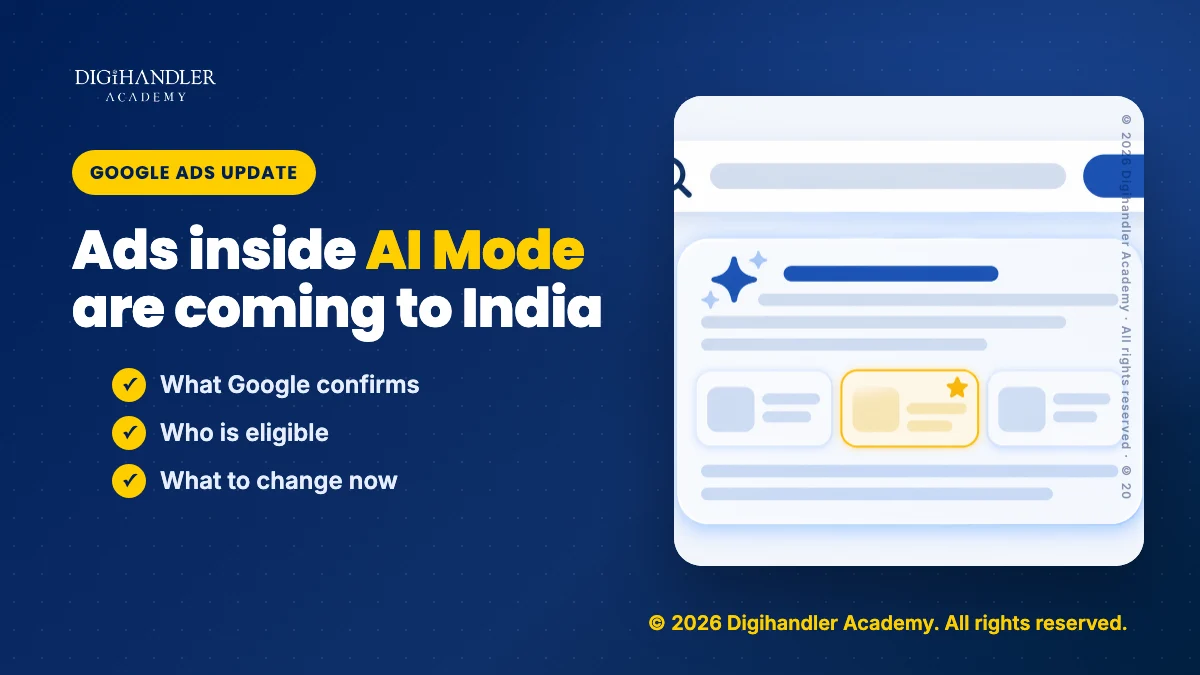
Google Search now has two AI features. AI Overviews is the short AI summary that appears at the top of many normal search results. AI Mode is a separate, chat style search where people ask longer questions and follow up.
Ads can now show inside both. Think of it like a shopkeeper who answers your question and then says, "If you want, this brand sells it near you." The ad sits next to the answer, not only above the blue links.
Google's help page says these ads are clearly labelled "Sponsored" and look different from the normal answer. In AI Overviews, ads can appear within, above or below the summary. In AI Mode, they can appear within or alongside the AI response.
This matters for jobs too. Managing ads in AI search is becoming a normal part of paid search work, which is one reason it features in our guide to AI-era marketing jobs freshers can aim for.
Here is exactly what Google has published, in order.
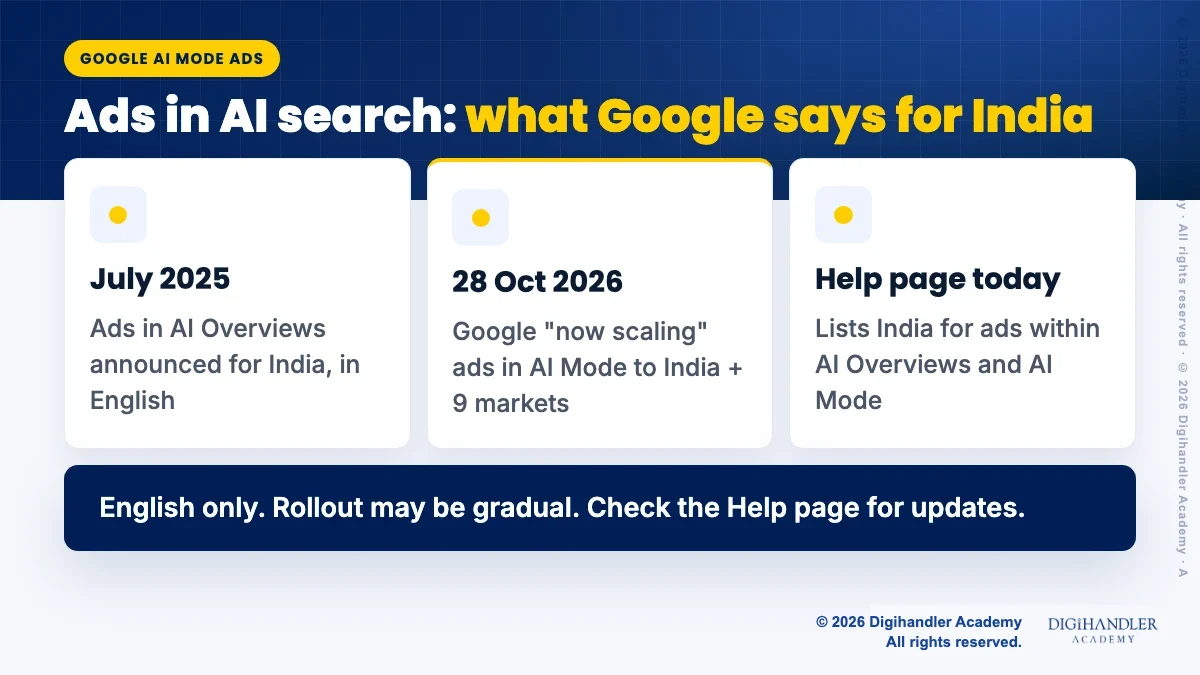
In July 2025, Google India's blog said it would launch ads in AI Overviews in India, in English, on mobile and desktop, "later this year". It did not mention ads in AI Mode for India at that time.
On 28 October 2026, the official Google blog said Google is now scaling ads in AI Mode in Australia, Canada, India, Kenya, Malaysia, New Zealand, Nigeria, Pakistan, the Philippines and Singapore.
Google Ads Help, in its page "About ads in AI-powered experiences in Google Search", now lists India among the countries where ads can appear within AI Overviews and AI Mode. The same page says these placements are English only.
So the honest answer: Google confirms India is eligible for both. What Google does not publish is a date by which every Indian user or every account will see AI Mode ads. "Scaling" usually means a gradual rollout, so some searches may show them and others may not for a while.
How can you check for yourself? First, reread that Google Ads Help page, since Google updates its country list there. Second, search in English for your own buying keywords in AI Mode and look for the "Sponsored" label. Don't click your own ads, because each click costs you money. Remember that results change from person to person, so one search proves very little.
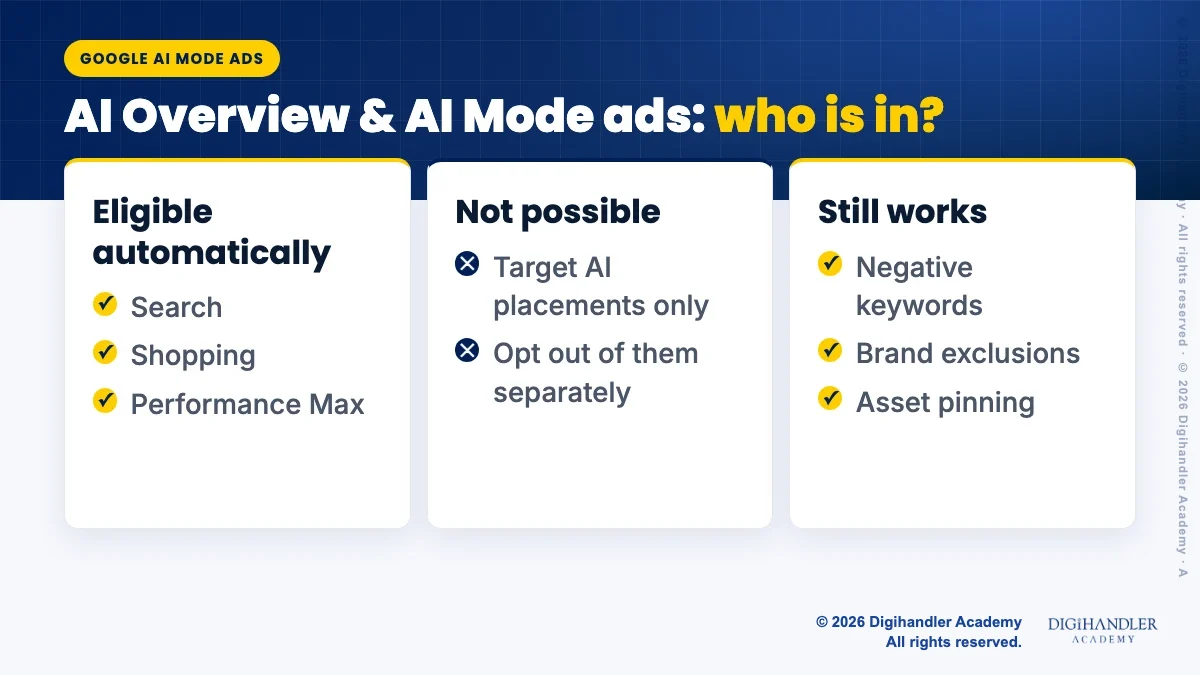
No. Google says Search, Shopping and Performance Max campaigns are automatically eligible. You don't need a new campaign type or a separate budget.
The flip side is also true. You cannot target AI Overviews or AI Mode on their own, and you cannot opt out of them separately from Search. If your campaign runs on Search, it may show in these places.
Normal Search ads can also appear above or below an AI Overview. Google says those placements work in every country and language where AI Overviews appear. The ads inside the AI answer are the part limited to English and the listed countries.
Google says text ads and Shopping ads can appear, while local inventory ads and vehicle ads are still being tested. Google has also launched ads in follow up questions in the US. Its announcement does not say when that comes to India.
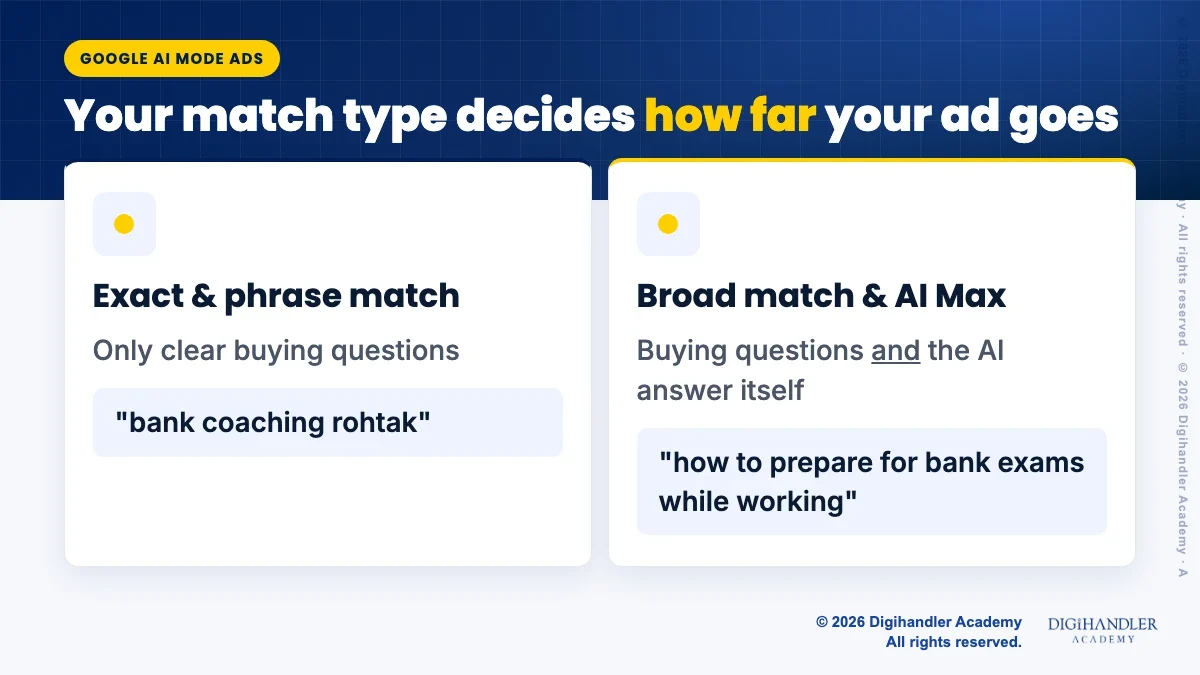
This is the part most small advertisers miss. Your keyword match type decides how far your ad can travel.
Google's help page says AI powered targeting, meaning AI Max for Search and broad match on Search, Shopping and Performance Max, can match your ad to the question and also to the AI response itself. Google calls the second kind contextual matching.
Exact match and phrase match keywords work differently. They only match when the question shows clear buying intent. They are not eligible for contextual matching on wider, exploring questions.
An example helps. Someone types "how do I prepare for bank exams while working full time" in AI Mode. A Rohtak coaching centre with only exact match keywords like "bank coaching rohtak" may not appear. One using broad match or AI Max might, because the AI answer talks about coaching options.
Google also says AI Mode questions are on average about three times longer than traditional searches. Long, chatty questions rarely match a short exact keyword.
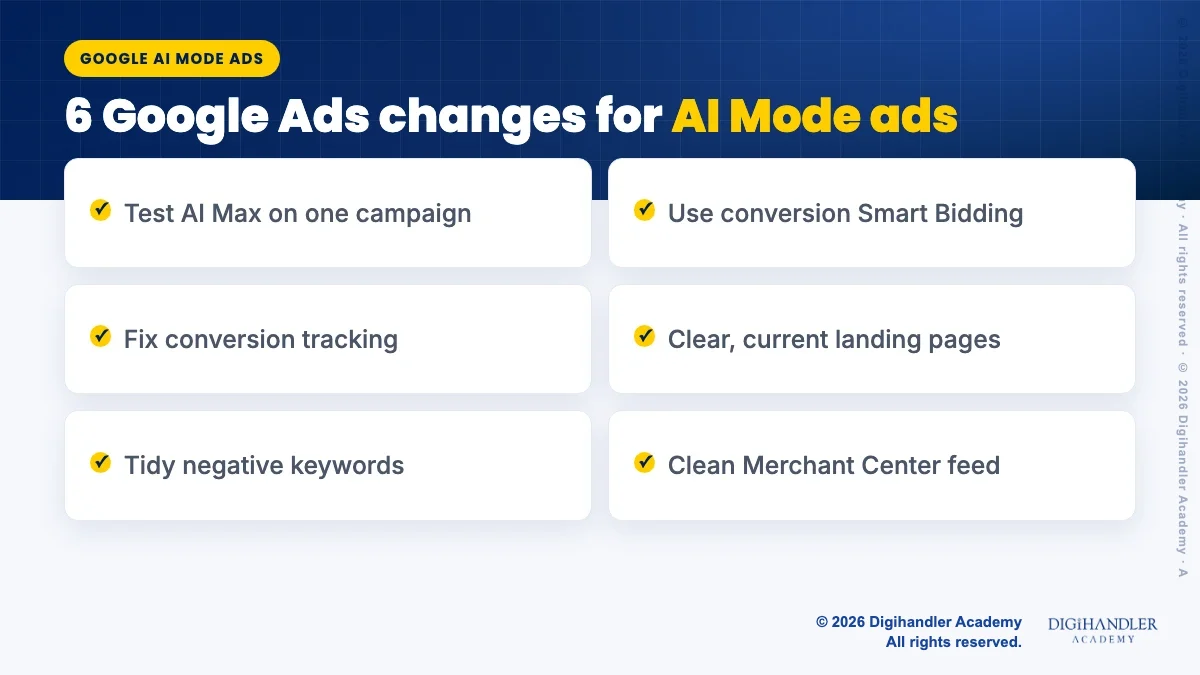
Google's help page gives a short list of recommendations. Here they are in plain words, with the trade offs a small budget should keep in mind.
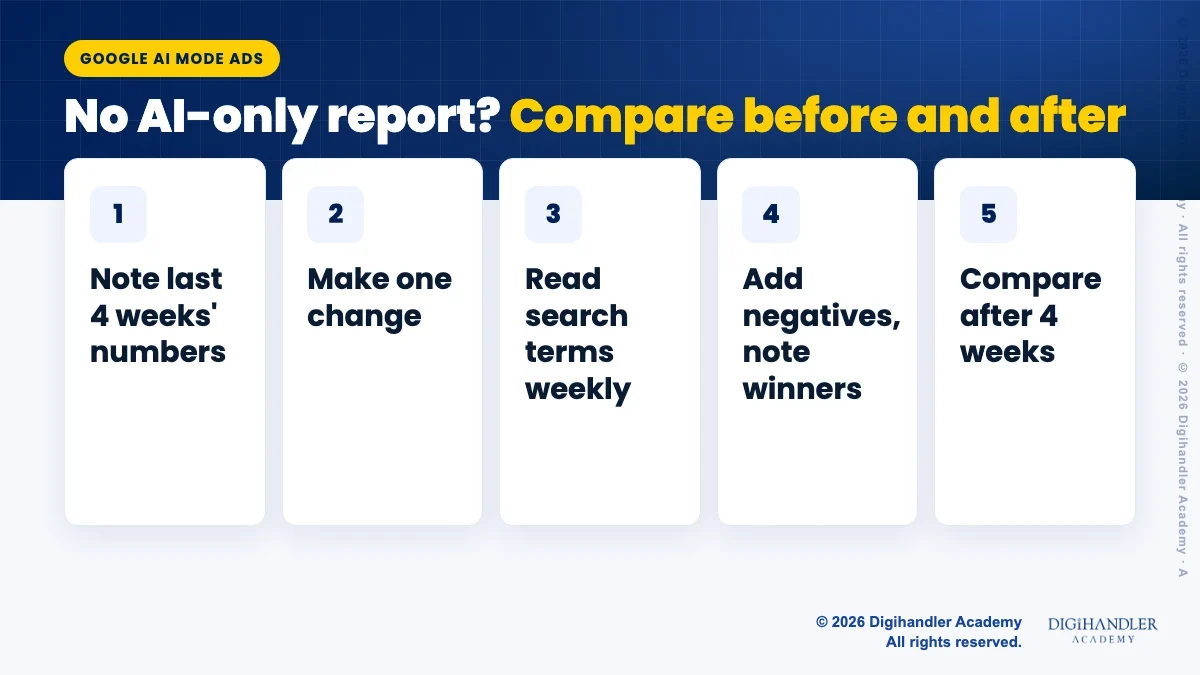
Google says impressions, clicks, conversions and cost from these placements are included in aggregate in your standard campaign reports. Queries that trigger them are part of the search terms report too. There is no separate AI column to filter on.
So you measure the change, not the placement. A simple weekly habit works well:
Clients will ask you about this. Most small business owners in India have heard "AI search" but not how it affects their ad money. Being able to explain the points above calmly is already a useful skill.
The core work has not changed much. Good tracking, clear landing pages, sensible negatives and patient testing were always the job. AI placements just reward people who do those basics well.
Google is not the only one adding ads to AI answers. Our ChatGPT ads guide for India covers the other side. If you are worried about where this leaves careers, read which marketing tasks AI takes and which skills hold up.
Ads are only half the picture. Business owners should also check whether AI answers mention them for free, which we explain in how to check if ChatGPT is recommending your business. If you want structured practice with live campaigns, the Google Ads course walks through tracking, match types and bidding step by step.

Riya writes Digihandler Academy's guides and roadmaps. Every article is fact-checked and reviewed by Lovish Madaan, founder & trainer, who has run the Digihandler agency since 2018. More from Riya →
Google confirms India is eligible. On 28 October 2026, Google's official blog said it is scaling ads in AI Mode to 10 more markets, including India. Google Ads Help also lists India among countries where ads can appear within AI Overviews and AI Mode, in English only. Google has not published a date by which every user will see them, so the rollout may be gradual. Check the Google Ads Help page "About ads in AI-powered experiences in Google Search" for the current country list.
No. Google Ads Help says you cannot target ads only to AI Overviews or AI Mode, and you cannot opt out of them separately from Search. If your Search, Shopping or Performance Max campaign is running, it may be eligible. You still have controls, though. Negative keywords, brand exclusions and asset pinning continue to apply to these placements, so you can stop your ads from showing for searches that don't fit your business.
No. Google says Search, Shopping and Performance Max campaigns are automatically eligible for ads in AI Overviews and AI Mode, with no new campaign or separate budget needed. What changes your reach is the match type. Broad match and AI Max for Search can match your ad to the AI response itself. Exact and phrase match keywords only match when the question shows clear buying intent.
Not as a separate segment. Google says impressions, clicks, conversions and cost from AI Overviews and AI Mode are included in aggregate in your standard campaign reports, and triggering queries appear in the search terms report. The practical way to judge impact is to compare cost per conversion before and after a change, such as turning on AI Max, and to review long, question style search terms each week.
Not inside the AI answer, according to Google's current help page. Ads within AI Overviews and AI Mode are available in English only, in the United States and a list of other markets that includes India. Normal Search ads above or below AI Overviews are different. Google says those can appear in every country and language where AI Overviews are available, so Hindi searches can still show your regular Search ads.
Where AI genuinely saves marketers time on real client work, and where it quietly makes things worse.
Read article →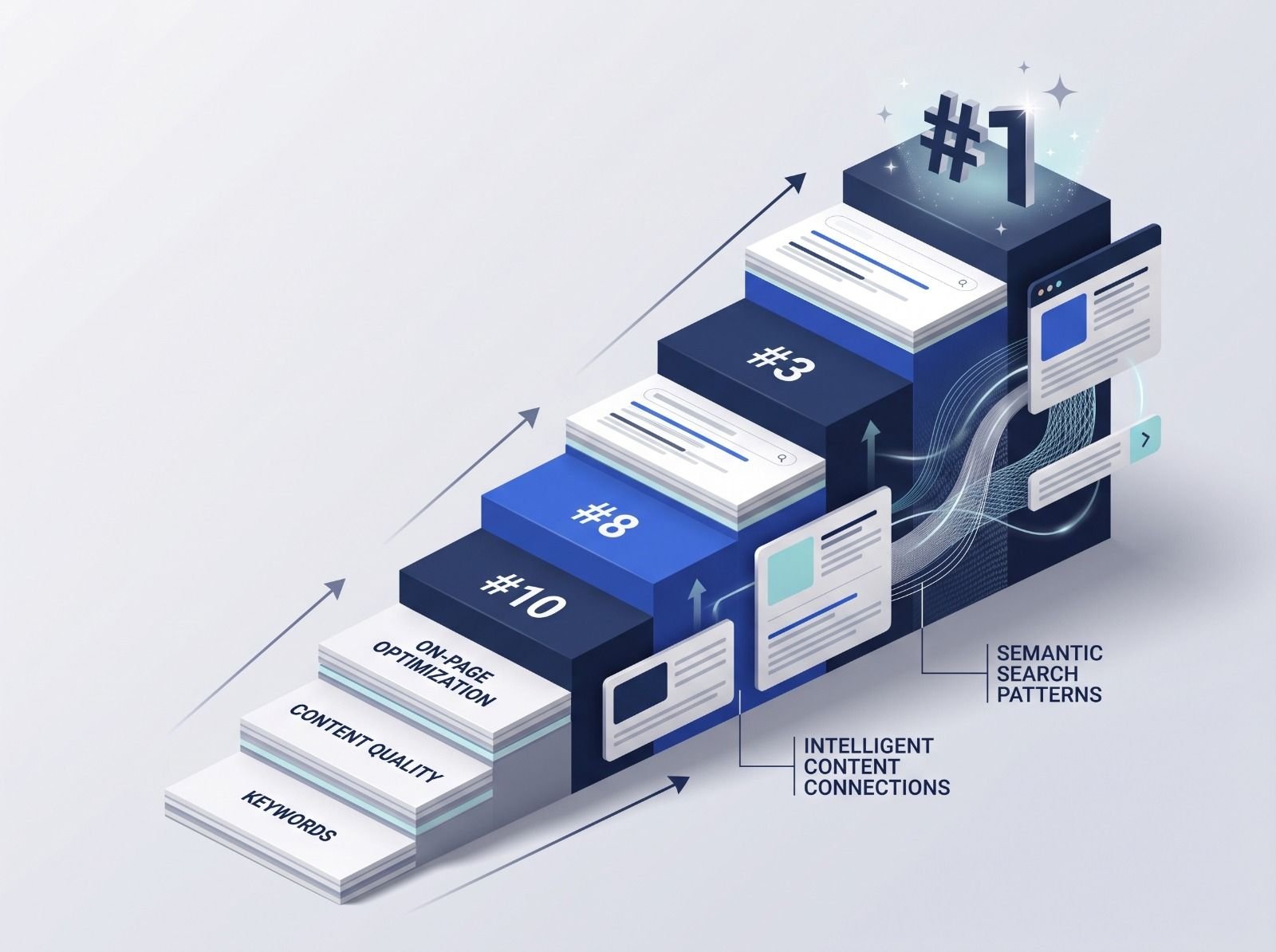
What decides whether an AI assistant quotes your page, and the fixes worth doing first.
Read article →