What actually happens in a video editing masterclass
Most people who sign up for an editing class already know how to cut a clip. What they lack is the order of operations: what to say in the first second, how to shoot so the edit is easy, and what to do with a finished reel so it earns something. A good masterclass teaches that order, and you do each step in the room.
Editing is the middle of the job, not the whole of it
A reel that nobody watches past the second second was usually lost before anyone opened an editing app. The hook was weak, the shot was unplanned, or the topic was copied from a trend without being made your own. Effects do not fix any of that.
So a useful editing masterclass starts before the edit and ends after it. The sequence we teach is script, shoot, cut, caption, finish, then publish and pitch. Skip the first step and you spend three hours editing footage that was never going to work.
Hooks and scripts come first
The first line decides whether someone keeps watching. In our masterclass this is a module on its own: why people swipe away, how to find the exact second they stop watching in your own insights, and how to write openings that stop the scroll.
Trends get the same treatment. Copying a trend exactly as it is tends to bring fewer views than using its format with your own topic and voice. By the end of the first day each participant writes three hooks and one full script, checked by a trainer, rather than a page of notes about hooks.
Shooting on a phone, and the edit itself
Nobody needs a camera to start. What matters is shooting with the edit in mind: enough clean takes of each line, steady framing, usable sound, and B-roll you will actually cut to. That alone removes most of the frustration of a three-hour edit.
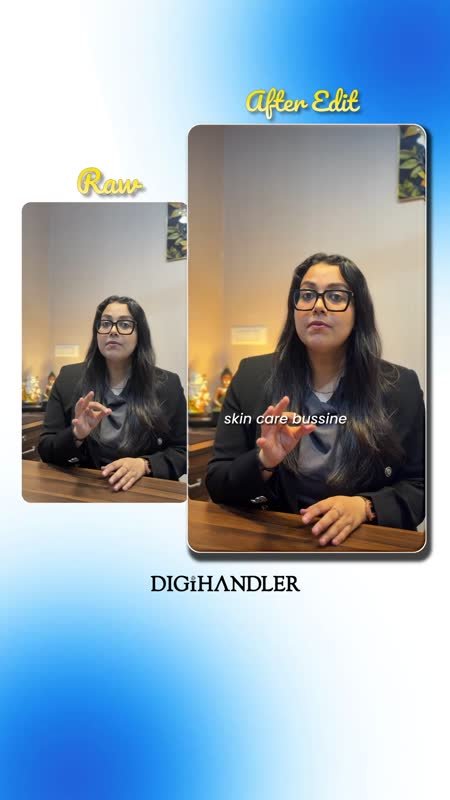
The edit is where the hands-on part matters most. Whether you work in CapCut on a phone or Premiere Pro on a laptop, the skills are the same: cutting dead air, pacing so something changes every few seconds, captions that are large and readable with the sound off, music that sits under the voice, and a basic colour finish. In our editing bootcamp a trainer checks each person’s edit one-on-one, with one trainer for every ten students during the editing session.
- Cut — remove every pause and repeated word before touching effects.
- Pace — change the shot, the caption or the framing often enough that the screen never sits still.
- Caption — most people watch with the sound off, so the words carry the reel.
- Sound — music under the voice, not over it, and sound that suits the platform.
- Finish — consistent colour and a clean last frame, so the reel looks deliberate.
Where AI tools fit
AI video and image tools are now useful for B-roll, background scenes, script drafts and caption timing. Our agency uses AI-generated scenes in some of the work we make for brands, and we show where they help.
They are also where beginners lose the most time. An AI clip that does not match your footage looks worse than no clip at all. The rule we teach is that AI fills gaps in a reel you have already planned. It does not replace the plan, and it does not replace your face and voice, which are the reason anyone follows you in the first place.
Getting paid is part of the class
Most creators we meet at 1k to 10k followers do not have a content problem. They have a system problem: no profile a brand would read, no idea what to charge, and pitches that amount to “hi sir, collab?”. That is why the second day of our masterclass ends with money, not effects.
That module covers a one-page profile for brands, a list of Rohtak brands to contact, ready messages to send, and how to set and talk about your price. The live task is to send three brand messages before you leave the room. We do not promise what those messages will earn. Results depend on your topic, your work and how consistently you follow up.
Who a masterclass like this suits
It is built for four kinds of people: college creators who want posting to turn into income, creators stuck between 1k and 10k followers whose views have stopped growing, local business owners who need reels for a shop, clinic or coaching centre, and freelancers who can edit a little but do not know how to get paid for it.
It is not the right fit if you want to become a full-time video editor for films or long-form YouTube. Two days builds a working short-form system. A career in editing needs months of practice, which is what the full video editing course is for.
What you should walk out with
Judge any editing masterclass by what is in your hands at the end. Ours is a two-day offline class at our Rohtak campus, four hours each day, across five hands-on modules, taught by Lovish Madaan and Manasvi Madaan with trainer support during editing. It is taught in a mix of Hindi and English.
Afterwards there is a 30-day plan: batch-shooting several reels in one day, a posting tracker, four weekly review calls and a study partner, because most people give up a week after any class.
- Scripts — 30 reel scripts and a 30-day content calendar, plus 50 ready hooks.
- A finished reel — one reel edited by you in class, checked by a trainer.
- A pitch kit — a one-page brand profile, a list of 50 Rohtak brands and 12 ready messages.
- A plan — a 30-day posting tracker and a Creator Money Map for your topic and platform.
Where we teach this
Common questions
A useful video editing masterclass covers more than the edit. It should include writing hooks and scripts, shooting on a phone with the edit in mind, cutting and pacing, captions, music and colour finishing, and what to do with the finished reel. Digihandler Academy’s two-day Rohtak masterclass runs five hands-on modules covering platform choice, why viewers swipe away, hooks and scripts, an editing bootcamp, and approaching brands, with a live task finished in class at the end of each.
No. Digihandler Academy’s video editing masterclass starts from zero, beginning with opening the editing app. During the editing session there is one trainer for every ten students, so each person’s edit is checked one-on-one and nobody is left behind. Bring a laptop if you have one; the academy keeps a few spares, and some editing can be done on a phone. A short setup list is sent before the class so you arrive ready.
Digihandler Academy’s Video Editing and Content Creation Masterclass is fully offline at the Rohtak campus, 1st Floor, 252 Subhash Nagar, opposite Subhash Park. It runs over two days, four hours each day. It is offline because trainers check each participant’s edit on their own laptop, which works far better in the room than over a screen share. Batch dates and venue details are confirmed with each participant on WhatsApp.
No class can promise that, and you should be careful of any that does. What a good masterclass gives you is the system: scripts, an edited reel, a brand profile, a list of businesses to approach, ready messages and a plan for the next 30 days. Income then depends on your topic, the quality of your work and how consistently you post and follow up with brands. At Digihandler Academy the class ends with three brand messages sent, which is a start, not a result.
More from the blog
AI SEO: how to get cited inside AI search results
Search is shifting from ten blue links to generated answers. What decides whether an AI assistant quotes your page, and the fixes worth doing first.
The power of a local business listing: the setup checklist we teach
For a shop in Rohtak, a properly set up Google Business Profile out-earns most paid campaigns. The exact checklist, in the order that matters.