Best education marketing agency in India: how to choose one in 2026
There is no single best education marketing agency in India, and anyone who tells you otherwise is selling. There is a best fit for your institute, your admission cycle and your counselling team. This guide explains what education marketing really involves, what a good agency should do at each stage, the questions worth asking, the red flags worth walking away from, and how to measure the work honestly. We run an agency and an institute ourselves, so we say clearly where we fit and where we do not.

What education marketing actually involves
Education marketing is not the same as marketing a restaurant or a clothing brand. The decision is slow, expensive, emotional and usually shared between more than one person. A student might discover a course on Instagram in March, ask a parent in April, visit the campus in May and pay in June. Every stage of that journey can leak, and an agency that only looks after one stage will usually blame the others when admissions disappoint.
In practice, the work covers a connected set of jobs: being found locally when someone searches for a school, college or coaching centre nearby; running Meta and Google campaigns that bring enquiries; building landing pages that turn visits into forms; following up quickly by phone and WhatsApp; publishing content and reels that build trust before the first call; collecting and replying to reviews; and, increasingly, being described accurately when someone asks an AI assistant which institute to choose.
None of these pieces works well alone. Ads without follow-up waste money. Reviews without a Google Business Profile that is properly maintained get seen by fewer people. Content without a clear next step builds an audience that never enquires. When you assess an agency, the first thing to check is whether they understand the whole chain or only sell one link of it.
Parents, students and the admission calendar
Most education brands market to two audiences at once, and they want different things. Students often care about outcomes, peers, campus life and whether the teachers are good. Parents tend to care about safety, results, fees, distance, faculty credentials and whether the institute will still be around in three years. A school sells mostly to parents. A skill academy for working adults sells mostly to the learner. Coaching institutes and colleges usually sit in between.
A good agency builds separate messages, creatives and sometimes separate campaigns for each audience. A reel that makes a seventeen-year-old stop scrolling is rarely the same asset that reassures a parent comparing three options. Ask any agency you meet how they would split the message for your institute. If the answer is one set of ads for everyone, they have not thought about your buyer.
The second thing that separates education from other categories is the calendar. Admissions run in seasons: board results, entrance exam dates, academic sessions, festival breaks, batch start dates. Spending evenly across the year is usually a mistake. A capable agency plans backwards from your admission dates, builds awareness and content before the peak, puts the heaviest paid spend where enquiries actually convert, and uses the quiet months to fix the website, collect reviews and prepare creative.
- Before the peak — Content, reels, review collection, Google Business Profile updates and remarketing audiences built from engaged visitors.
- During the peak — Lead campaigns at full budget, fast counselling follow-up, daily checks on lead quality and form errors.
- After the peak — Review what converted, clean the CRM, fix landing pages and plan the next season’s creative.
Lead quality matters more than lead volume
The easiest way for an agency to look good is to deliver a large number of cheap leads. The easiest way for an institute to lose money is to accept that as success. A form filled by someone outside your city, outside your age group, or with no intention of joining costs your counselling team time and tells you nothing about whether the marketing works.
Good agencies define a qualified lead with you before the first campaign goes live. That might mean the right location, the right class or course level, a working phone number and a stated intent to join within the season. They then set up the forms, questions and campaign settings to filter for that, even if it means fewer leads at a higher cost each. Instant forms on Meta, for example, can be set to a higher-intent version that asks the person to review their details, which usually reduces junk submissions.
The other half of lead quality is speed. An enquiry for a course is rarely exclusive; the same student has often filled forms for two or three institutes in the same evening. Whoever calls back first, politely and with useful information, has an advantage. An agency cannot make your counsellors faster, but a good one will measure response time, route leads instantly to the right person, and tell you plainly when leads are going cold in the CRM.
Local foundations: Google Business Profile, reviews and campus SEO
For any institute with a physical campus, the Google Business Profile is often the first thing a parent sees. It shows up for searches such as a coaching centre near me or a school in a particular area, and it carries your reviews, photos, timings, phone number and directions. Many institutes leave it half-finished, with wrong categories, old photos and unanswered reviews. Fixing it is one of the least glamorous and most useful jobs an agency can do.
A good agency will choose accurate categories, add real campus photos, post updates around admission dates, answer common questions, and set up a simple process to ask satisfied students and parents for reviews. They will also reply to reviews, including the negative ones, in a calm and specific way. Prospective parents read the replies as closely as the reviews.
Local SEO goes beyond the profile. Your website needs clear pages for each course or programme, the campus address and contact details written consistently everywhere, and location pages only where you genuinely serve students. If you run live online batches as well as a campus, say so clearly on each page. Ask an agency how they would structure your site so that a search for your course in your city lands on a page that answers the question, not on a generic home page.

Paid campaigns, landing pages and WhatsApp follow-up
Most education brands in India run lead campaigns on Meta (Facebook and Instagram) and Google. They play different roles. Meta reaches people who are not yet searching, which makes it useful for building interest before the peak and for creative-led offers such as a free demo class or a masterclass. Google Search catches people who are already looking for a course, a school or a coaching centre, which usually means higher intent and a higher cost per click.
Whichever platform you use, the landing page decides a large part of the outcome. A good education landing page answers the obvious questions without making anyone call: who the course is for, what it covers, how long it runs, the batch format, where the campus is, what students say, and what happens after the form is submitted. It loads quickly on a phone and has one clear call to action. Ask to see landing pages an agency has built, and open them on your own phone.
Then comes follow-up. In India, a large share of education conversations move to WhatsApp, so the hand-off from form to WhatsApp needs planning. That means an instant acknowledgement, a named counsellor, useful material such as a brochure or batch schedule, and a clear way to book a visit or demo. It also means respecting consent and not flooding people with broadcast messages they never asked for. An agency that builds campaigns but leaves follow-up entirely to chance is doing half the job.
- Tracking — Pixel and Conversions API on Meta, conversion tracking on Google, and form data flowing into a CRM or at least a shared sheet.
- Forms — Short, but with one or two qualifying questions such as course, class or city.
- Hand-off — Leads routed to a named counsellor immediately, with a WhatsApp acknowledgement and a clear next step.
Content, reels and visibility in AI search
Parents and students rarely enquire after seeing one ad. They check your Instagram, your YouTube, your reviews and sometimes your faculty’s personal profiles before deciding whether you are serious. Content is what they find when they look. For education brands, the content that tends to earn trust is specific: a teacher explaining a tricky concept, a walk through the campus, a student describing what changed for them, an honest answer to a fee or schedule question.
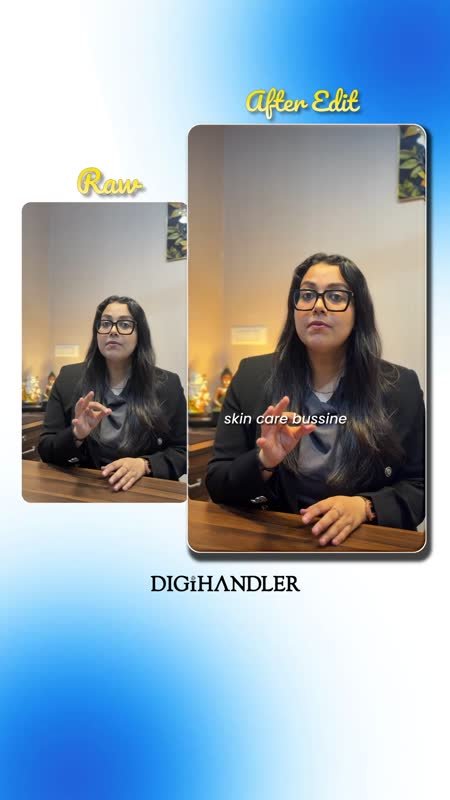
A good agency will help you build a repeatable system for this rather than a burst of polished videos that stops after a month. That usually means planning topics around the questions your counsellors hear every day, filming in batches, editing for short-form platforms, and making sure faculty and founders are comfortable on camera. Reels made this way also give your paid campaigns better creative to test.
AI search is the newer piece. More people now ask assistants such as ChatGPT, Gemini or Google’s AI features which institute to choose for a course in a particular city. Nobody can control those answers, but you can make it easier for them to be accurate: clear course pages, consistent details across your website and listings, real reviews, and plain-language answers to common questions. Ask any agency what they are doing about this and listen for a practical answer, not a promise of guaranteed placement.
Questions to ask before you sign
A first meeting with an agency is usually a pitch. These questions turn it into an assessment. Ask them directly, take notes, and compare the answers across the agencies you speak to. Vague answers are information too.
- Who owns the accounts? — Your Meta Business Manager, ad accounts, Google Ads, Analytics, Google Business Profile, website and content should be in your name, with the agency given access.
- How will you define a qualified lead? — Listen for questions about your courses, locations, age groups and counselling process, not a promise of a number.
- What happens after the form? — A good answer covers routing, response time, WhatsApp hand-off and CRM tracking.
- How do you plan around our admission calendar? — They should ask for your session dates, exam dates and batch start dates before proposing a budget split.
- Who will actually work on our account? — Ask to meet the people running your campaigns and making your content, not only the person selling.
- What will you report, and how often? — Expect regular reports that show spend, leads, qualified leads and admissions where you share that data, with notes on what changed.
- What are the contract terms? — Ask about minimum periods, notice, and what happens to your assets and data if you leave.
- What would you not do for us? — An honest agency will tell you which parts sit outside its strengths.
Red flags worth walking away from
Most bad agency experiences in education follow familiar patterns. None of these is automatically fatal on its own, but two or three together should make you cautious.
- Guaranteed admissions or rankings — No agency controls whether a family chooses your institute or where Google ranks a page. A guarantee means either a misunderstanding or a sales tactic.
- The agency owns your ad accounts — If the account, pixel and audiences sit in the agency’s business manager, you lose your history and data when you leave.
- Vanity metrics in reports — Reach, impressions, likes and followers are useful context, but a report built only on them is avoiding the question of enquiries and admissions.
- Cheap leads celebrated, quality ignored — A falling cost per lead means nothing if your counsellors say the leads are junk.
- No interest in your counselling process — An agency that never asks how leads are handled will blame the counsellors when results disappoint.
- Long lock-in with no exit terms — Reasonable minimum periods exist because campaigns need time, but you should know exactly how to leave.
- Fake reviews or bought followers — These can breach platform rules and damage trust with parents who notice. Walk away.
How to measure an education marketing agency
The useful measures follow the student’s journey from first click to joining. Start with cost per lead, which is total spend divided by enquiries. It is easy to calculate and easy to game, so treat it as a starting point only. The more important figure is cost per qualified lead: total spend divided by the enquiries that met the definition you agreed with the agency. This tells you what it costs to put a genuine prospect in front of your counselling team.
Next is the enquiry-to-admission rate, the share of qualified enquiries that eventually enrol. This depends on the agency and your team together. If qualified leads are rising but admissions are not, the problem may be follow-up speed, pricing, batch timing or the campus visit, not the ads. A good agency will help you see which, rather than hiding behind lead counts.
Finally, look at cost per admission over a full season, and compare channels fairly. Search, Meta, organic content, referrals and walk-ins all contribute, and students often touch several before joining. Ask the counsellors to record where each admission first heard of you, keep the CRM clean, and review the numbers with the agency every month. Benchmarks vary widely by city, course and fee level, so the most useful comparison is your own institute this season against your own institute last season.
Where Digihandler fits, and an honest disclosure
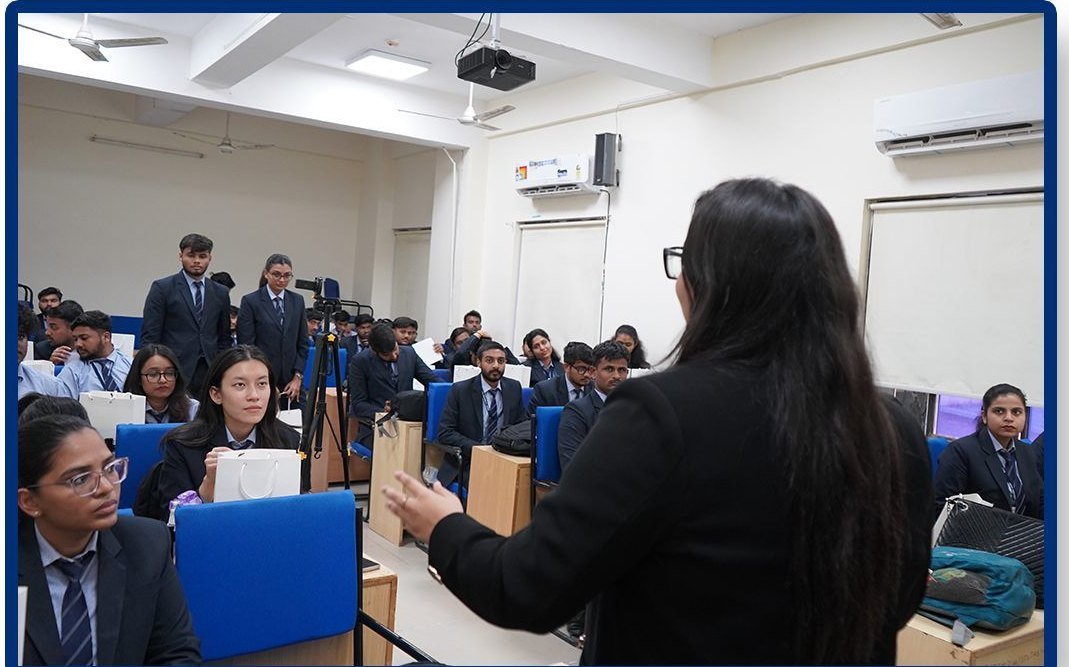
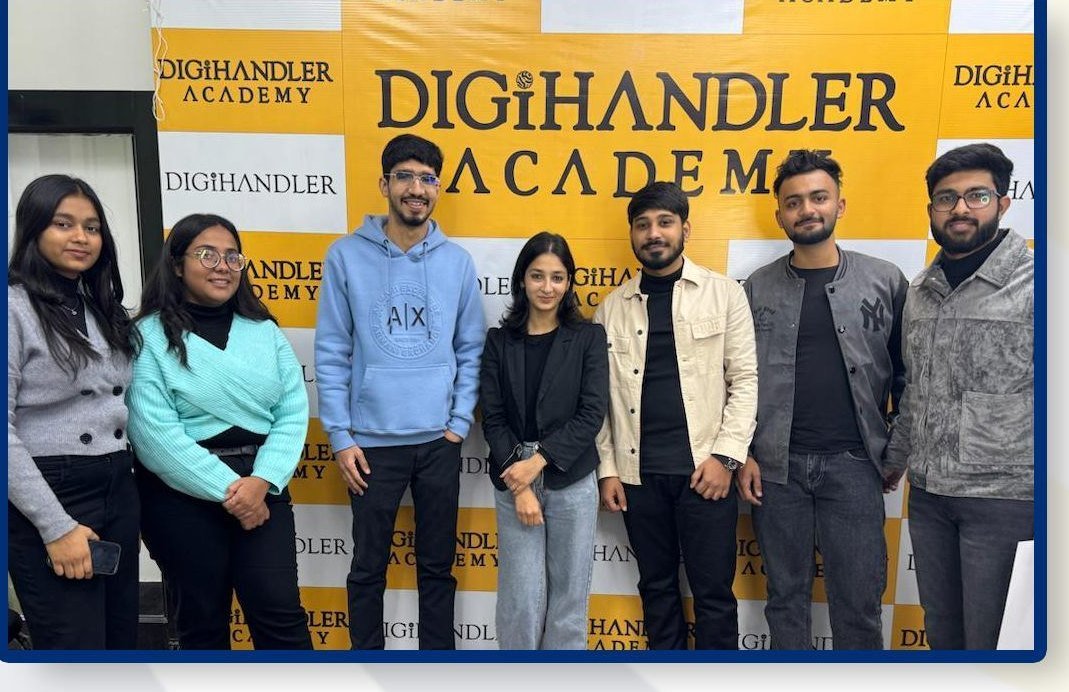
This is our blog, and Digihandler is our own agency, so read this section with that in mind. Digihandler Private Limited is a creative social and performance studio based in Rohtak, Haryana, founder-led since 2018, with a team of 15 serving clients across India and overseas. Lovish Madaan leads performance marketing and search, and runs Digihandler Academy. Manasvi Madaan leads content strategy and creative direction. The services are premium video editing, personal branding, performance marketing on Meta and Google, AI-assisted SEO, website design and social media management.
Our education experience comes mainly from marketing our own institute. Digihandler Academy is an ISO 9001 certified digital marketing institute in Rohtak that we market ourselves every day: more than 300 students trained in three years, 240 Google reviews on the academy listing, a website with course pages for cities across India, live online and campus batches, lead forms feeding a CRM, masterclasses and a student app. That is not a client result; it is our own institute. But it means we deal with admission seasons, counselling follow-up, reviews and parent questions as operators, not only as advisers.
Our working terms are on our site. Clients own their ad accounts, content and data from day one. Reports are monthly. Retainers have a three-month minimum and then run month to month with 30 days’ notice. Paid campaigns usually take two to four weeks to settle, organic content two to three months, and search three to six months. Digihandler is rated 5.0 on Google for the Digihandler Pvt Ltd listing.
We do not guarantee admissions or rankings, and we do not think any honest agency can. Admissions depend on your courses, fees, faculty, location, timing and how your team handles each enquiry. Rankings depend on Google. What an agency can promise is careful work, clear reporting and straight answers. If that matches what you need, we are glad to talk. If another agency fits your institute better, use the questions above to choose it with confidence.

Founded Digihandler, the parent digital marketing agency, in 2018. Leads performance marketing and search for agency clients in Rohtak, Gurugram, Delhi and beyond.
Where we teach this
Common questions
There is no single best education marketing agency in India for every institute. The right agency depends on whether you are a school, college, coaching institute, skill academy or edtech brand, which cities you serve, your admission calendar and how your counselling team works. Shortlist agencies that understand the full chain from ads to follow-up, let you own your ad accounts and data, define qualified leads with you, report on admissions rather than likes, and never guarantee admissions or rankings. Then compare their answers to the same set of questions.
No honest agency can guarantee admissions. Whether a student joins depends on your courses, fees, faculty, location, batch timing and how quickly and helpfully your counsellors respond, none of which the agency fully controls. Rankings on Google are decided by Google, not by any agency. What a good agency can commit to is the work itself: accurate tracking, well-run campaigns, useful landing pages, regular reporting and honest advice. Treat any promise of guaranteed admissions or first-page rankings as a red flag, not a selling point.
Start with cost per lead, but do not stop there because it is easy to inflate with low-quality enquiries. The more useful measure is cost per qualified lead, which counts only enquiries that meet a definition you agreed in advance, such as the right city, course and intent to join. Then track the enquiry-to-admission rate and cost per admission over a full season. Compare your institute with its own previous season rather than with generic benchmarks, because results vary widely by city, course and fee level.
Most institutes benefit from both, used for different jobs. Google Search catches students and parents who are already looking for a course or coaching centre, so intent is usually higher and clicks cost more. Meta reaches people who are not yet searching, which suits building interest before the admission peak and promoting demo classes or masterclasses. Whichever you use, set up conversion tracking properly, send leads to a fast-loading landing page or a qualifying form, and follow up quickly by phone and WhatsApp.
Your institute should own every account: Meta Business Manager and ad accounts, Google Ads, Google Analytics, Google Business Profile, the website and the content produced for you. The agency should be given access as a partner, not hold the accounts in its own name. This protects your campaign history, audiences, pixel data and reviews if you ever change agencies. Ask about ownership in the first meeting and confirm it in writing before any campaign spend begins. Digihandler, for example, gives clients ownership from day one.
More from the blog
AI SEO: how to get cited inside AI search results
Search is shifting from ten blue links to generated answers. What decides whether an AI assistant quotes your page, and the fixes worth doing first.
The power of a local business listing: the setup checklist we teach
For a shop in Rohtak, a properly set up Google Business Profile out-earns most paid campaigns. The exact checklist, in the order that matters.