
AI SEO: how to get cited inside AI search results
A page can rank third and still lose the click, because the answer now sits above the results with somebody else quoted in it. That is the shift worth understanding, and most of what fixes it is unglamorous.
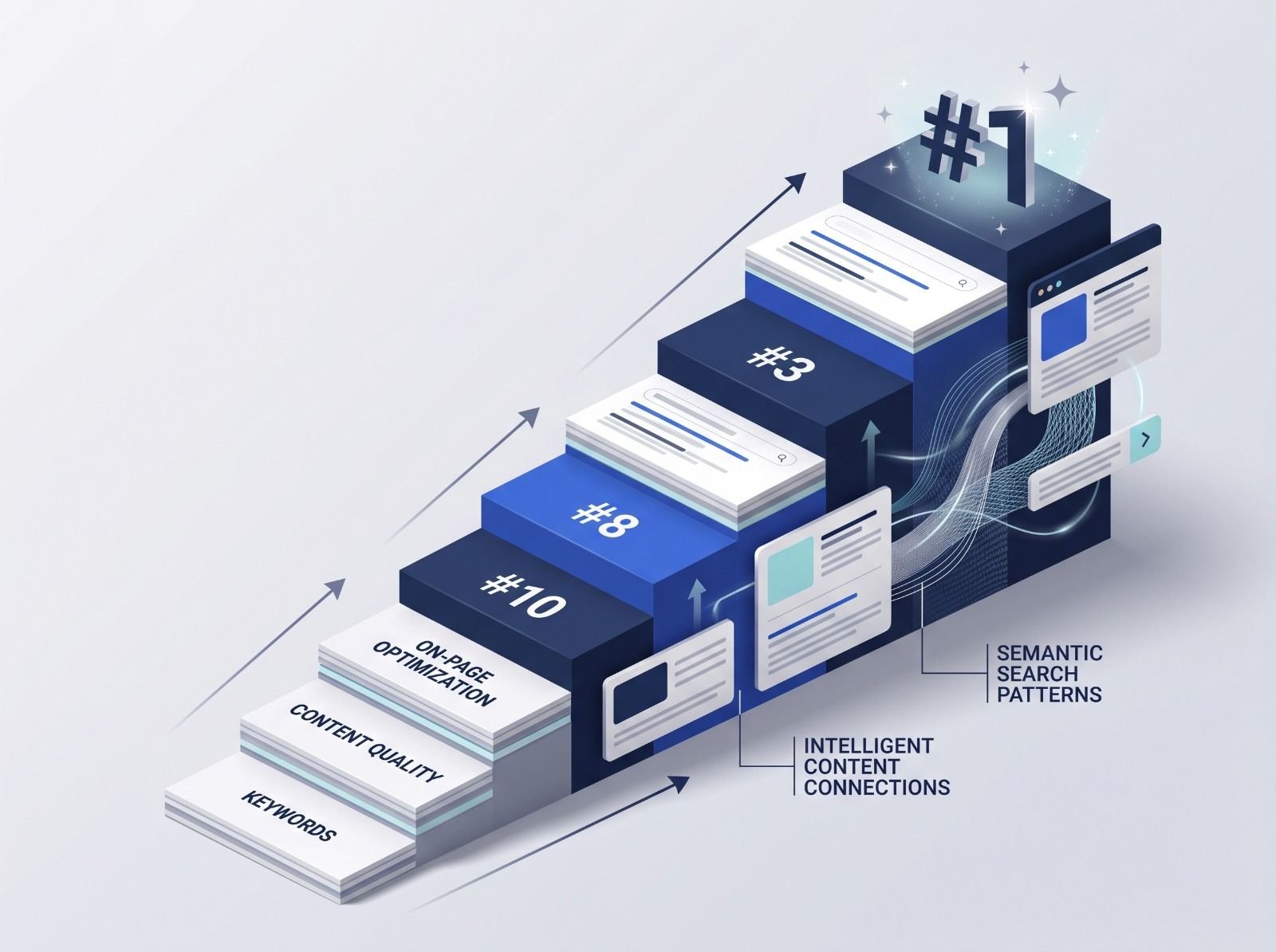
Ranking and being quoted are two different jobs
Google's AI Overviews, ChatGPT search and Perplexity all do the same thing: read a handful of pages, then write one answer and credit a few sources. Your page is no longer competing only for a position. It is competing to be the passage the model finds easiest to lift.
That changes what to optimise. A page can be technically perfect and still be skipped because its answer is spread across six paragraphs and three subheadings. A worse page that answers the question in one clean block gets the citation instead.
Write answers that can be lifted whole
When we audited our own site in August 2026 we measured the FAQ answers on our course pages. They averaged 28.6 words. The FAQ hub averaged 55.3. Not one answer on the entire site sat in the 130-170 word band that tends to get extracted.
That is a fixable problem and it is the highest-leverage one on this list. Take your most common customer question, answer it in a self-contained block of roughly 130 to 160 words, and make sure that block does not depend on the paragraph above it for context. A model reading the page in isolation should be able to quote it and be correct.
- Answer first — the claim in the first sentence, the reasoning after it. Never the other way round.
- Self-contained — no "as mentioned above", no pronouns pointing at earlier paragraphs.
- Named specifics — numbers, tool names, places. "Fees start from ₹4,999 per month" is quotable; "affordable fees" is not.
- One question per block — two questions in one answer means neither gets cited cleanly.
Publish the number you keep hiding
Price is the most-asked question in almost every category, and the most commonly withheld. "Contact us for pricing" cannot be cited, because there is nothing to cite. Any competitor who publishes a figure or a range gets quoted on the question you refused to answer.
We had this exact fault. Our FAQ said fees were quoted on a call rather than published, and the highest-intent question in our category had no extractable answer anywhere on the site. Fixing it was a copy change, not a technical one.
Check that the assistants can actually read you
Two things block AI crawlers, and both are quiet. The first is robots.txt: GPTBot, ClaudeBot, PerplexityBot, OAI-SearchBot and Google-Extended are separate user agents, and a wildcard rule that blocks aggressive scrapers can take them out too. Google-Extended is the one people miss — it governs AI Overview grounding without touching your Search ranking, so blocking it costs you AI visibility and nothing tells you.
The second is client-side rendering. If your content only appears after JavaScript runs, some crawlers will see an empty shell. Test it the blunt way: fetch your page with curl and read what comes back. If your answer is not in that HTML, an assistant may never see it.
Structured data helps entity resolution, not rankings
Be careful with the claims here, because a lot of advice overstates it. Schema markup does not make an assistant cite you, and Google retired FAQ rich results for every site in May 2026, so FAQPage markup no longer earns a SERP feature.
What schema still does is remove ambiguity about who you are. One Organization node with a stable @id, referenced by your other markup rather than re-declared, tells a machine that the course, the reviews and the business are one entity. We found three unlinked nodes for one organisation on our own site — a common fault, and worth fixing for correctness even though nobody should promise you a ranking for it.
Say what you actually know, including the limits
Assistants are drawing on pages that read like they were written by someone who has done the thing. Concrete numbers, named tools, stated trade-offs, and an honest limitation do more than another round of adjectives.
The honest limitation on this topic: nobody can currently prove which of these changes moves citation rates, because the platforms publish no citation analytics. What is verifiable today is whether your answers are extractable, whether crawlers can reach them, and whether your facts are consistent. Those are worth doing on their own merits. Anything beyond that is inference, and anyone selling it as certainty is guessing.
Where we teach this
Common questions
AI SEO is optimising a page to be cited inside generated answers — Google AI Overviews, ChatGPT search, Perplexity and Bing Copilot — rather than only to rank in the classic ten results. In practice it means three things: writing self-contained answers of roughly 130 to 160 words that can be quoted without surrounding context, making sure AI crawlers such as GPTBot, ClaudeBot, PerplexityBot and Google-Extended are not blocked in robots.txt, and serving your content in the initial HTML so a crawler that does not run JavaScript still sees it.
There is no confirmed evidence that schema markup increases AI citations, and anyone stating otherwise is guessing. What schema does reliably is resolve entity ambiguity: one Organization node with a stable @id, referenced rather than repeated by your other markup, makes it clear that your course, reviews and business are the same entity. Worth doing for correctness. Note also that Google retired FAQ rich results for all sites on 7 May 2026, so FAQPage markup no longer earns a search feature.
Roughly 130 to 160 words is the band that tends to get extracted as a citation. Shorter answers often lack enough context to stand alone, and longer ones bury the point so the model has to summarise rather than quote. The bigger factor is self-containment: the block must make sense with nothing above it, which means no "as mentioned earlier" and no pronouns referring back to a previous paragraph.
That depends on what you sell. If your business is publishing and traffic is the product, blocking training crawlers is a defensible commercial decision. If you are a local business, an institute or a service provider that wants to be recommended, blocking them removes you from the answers your customers are reading. Note that the agents differ: GPTBot trains models while OAI-SearchBot answers live ChatGPT searches, and Google-Extended controls AI Overview grounding without affecting your Google Search ranking.
More from the blog
The power of a local business listing: the setup checklist we teach
For a shop in Rohtak, a properly set up Google Business Profile out-earns most paid campaigns. The exact checklist, in the order that matters.
AI in digital marketing: what actually works right now
Where AI genuinely saves marketers time on real client work — and where it quietly makes things worse.
Learn this properly
3 days free · Rohtak campus & live online · from ₹4,999/month
Prefer to talk? Call 9991 729 730.