
AI in digital marketing: what actually works right now
AI is very good at the first eighty per cent of a task and confidently bad at the last twenty. Knowing which twenty is the actual skill, and it is the part no tool sells you.
Where it genuinely earns its place
Research and first drafts. Turning a messy client call into a structured brief. Producing fifteen ad-copy variants so you have something to test instead of two. Cutting a long video into short clips. Writing the boring first version of a report so you can spend your time on what it means.
The common thread: tasks where the output gets reviewed by someone who knows what good looks like, and where being roughly right quickly beats being perfect slowly.
- Ad copy variants — generate many, then let the account data decide. The tool proposes; the spend judges.
- Briefs from calls — a transcript becomes a structured brief in a minute, and you stop losing details.
- Repurposing — one long video into a week of clips and captions.
- Reporting drafts — the numbers are yours; the summary paragraph does not need to be written by hand.
- Research triage — sorting twenty competitor pages into what matters before you read them properly.
Where it quietly makes things worse
Unedited publishing. This is the failure we see most, and it is expensive in a way that is hard to notice: nothing breaks, the page simply never performs, and by the time you accept that, you have fifty of them.
Strategy is the other one. A model will produce a confident marketing plan for a business it knows nothing about, complete with channels and budgets. It reads well. It is a template with your industry pasted in, and following it costs real money.
And anything where being wrong is worse than being slow: legal claims, medical claims, price commitments, competitor comparisons. Check every fact that a customer could hold you to.
A rule that has held up: the tool drafts, you decide
Everything AI produces on a client account passes a human who can defend it. Not skimmed — actually read, by someone who would notice a wrong number or a claim the business cannot make.
This is also the honest answer to whether AI replaces marketers. It removes the hours, not the judgement. The person who can tell a client-ready draft from a plausible-sounding one is worth more than before, because there is now vastly more plausible-sounding output to sort through.
What we teach students to check
Every AI output gets checked for four things before it leaves the room. Numbers, because models invent statistics that look reasonable. Claims, because "leading" and "guaranteed" carry legal weight. Names, because a hallucinated tool or feature destroys credibility instantly. And tone, because generic enthusiasm reads as generic.
Students work through this on live accounts rather than exercises, which is the only way the difference between "sounds fine" and "is correct" becomes obvious. It is usually obvious the first time a client asks where a number came from.
The tools worth learning, and why the list is short
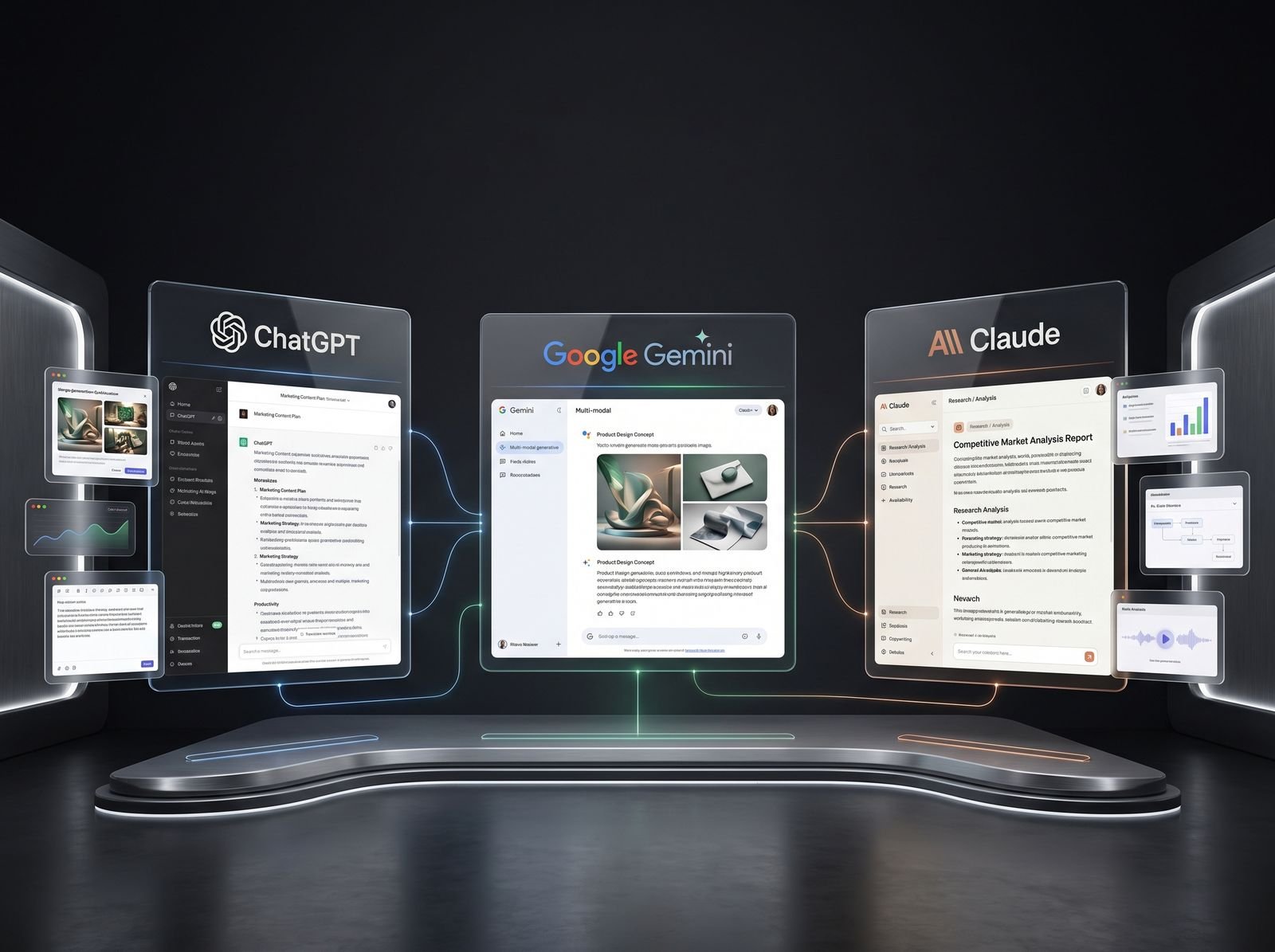
A general assistant for research, briefs and drafts. A design tool with AI fill for creative variants. An image generator for concepts, not for anything claiming to be a photograph of your business. A video tool for cutting and captioning. That is most of it.
Tool lists go stale within months, so what we teach is the workflow — where a human checkpoint sits, what gets verified, what never gets automated. That transfers when the tool changes, and it always changes.
Where we teach this
Common questions
It removes hours, not judgement. AI is strong at first drafts, variants, research triage and repurposing — the work where being roughly right quickly is enough because a knowledgeable person reviews the output. It remains weak at strategy for a specific business, at anything where a wrong fact carries a cost, and at knowing which of its own outputs is client-ready. The marketers losing work are those whose only contribution was volume; the ones gaining it can tell a usable draft from a plausible one.
Google's position is about quality and purpose, not the method of production. Content that genuinely helps a reader can rank regardless of how it was drafted; content mass-produced to game search is the target of the scaled-content policy, whether a human or a model wrote it. In practice the risk is not the tool, it is publishing unedited output at volume — pages that read plausibly, say nothing specific, and quietly never perform.
One general assistant for research, briefs and drafts; one design tool with AI fill for creative variants; one video tool for cutting and captioning short-form. That covers most day-to-day work. Learn the workflow rather than the interface — where the human checkpoint sits, what gets fact-checked, what never gets automated — because specific tools change every few months and the workflow transfers.
More from the blog
AI SEO: how to get cited inside AI search results
Search is shifting from ten blue links to generated answers. What decides whether an AI assistant quotes your page, and the fixes worth doing first.
The power of a local business listing: the setup checklist we teach
For a shop in Rohtak, a properly set up Google Business Profile out-earns most paid campaigns. The exact checklist, in the order that matters.
Learn this properly
3 days free · Rohtak campus & live online · from ₹4,999/month
Prefer to talk? Call 9991 729 730.